2026 Best Wastewater Equipment for Global Buyers
Choosing the 2026 best Wastewater Equipment requires more than comparing pump prices or stainless-steel grades. Global buyers now examine energy use, automation, maintenance access, discharge quality, and verified lifecycle costs. A clarifier that saves space may still demand costly sludge handling. Small details matter.
The United Nations World Water Development Report 2017 estimated that more than 80% of global wastewater was discharged without treatment. UN-Water’s SDG 6 Synthesis Report 2023 also showed serious gaps in wastewater monitoring and safe treatment. These findings make reliable equipment a public-health and resource-management priority. They also expose a weakness in many buying guides: specifications are often presented without local operating evidence.
Asit K. Biswas, a widely cited water-policy expert, said, “There is no water crisis, only a crisis of governance.” His observation applies directly to equipment selection. Technology cannot compensate for poor sampling, weak operator training, or missing spare parts. Not glamorous. Still decisive.
This guide evaluates biological treatment systems, membrane units, disinfection equipment, sludge dewatering machines, pumps, sensors, and control platforms. It considers performance in coastal plants, industrial zones, remote communities, and water-stressed cities. The reference points include UNESCO’s World Water Development Reports, UN-Water data, and manufacturer documentation that states test conditions clearly. Buyers should question every “best” claim. Results can change with temperature, influent strength, electricity quality, and operator skill. The most suitable Wastewater Equipment is therefore not always the newest system. It is the system that performs consistently, can be maintained locally, and proves its value over years.
Wastewater Equipment: Definition, Scope, and Global Market Needs
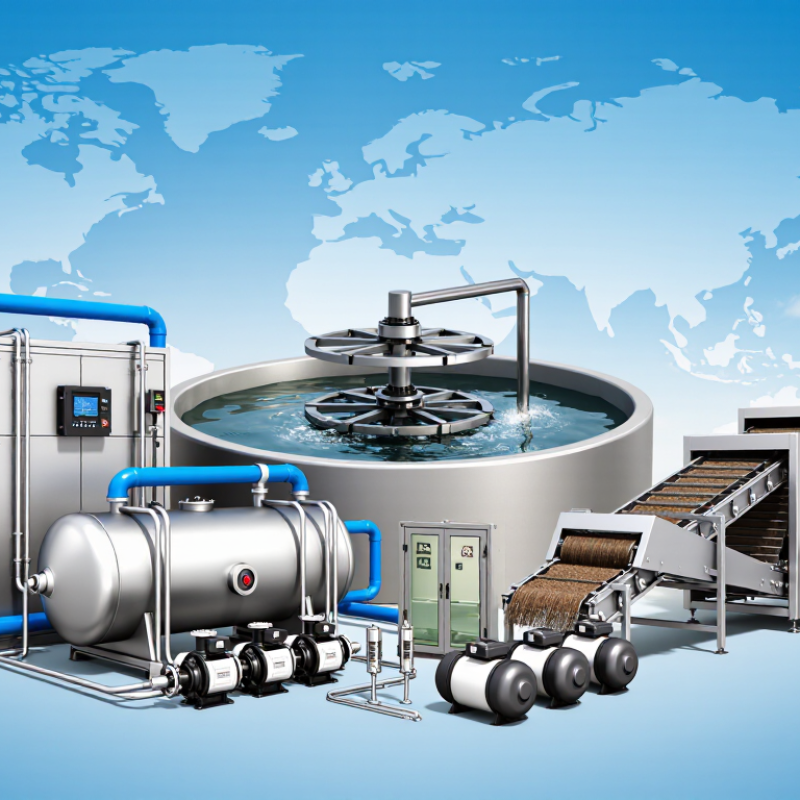
Wastewater equipment includes systems that collect, screen, treat, separate, disinfect, and monitor used water. Its scope covers municipal plants, factories, hotels, hospitals, and remote facilities. Common equipment includes screens, pumps, grit separators, biological reactors, clarifiers, filters, sludge dewatering units, and online sensors. Each unit serves a different treatment risk.
Global buyers need more than impressive flow rates. They need equipment suited to local water quality, climate, labor skills, power stability, and discharge rules. A food-processing site may require grease control, while a mining operation may need stronger solids handling. Experienced engineers often begin with flow measurements, laboratory testing, and a clear maintenance plan. They also check spare-part access and operator training before comparing prices. No equipment list is perfect. Actual influent can change sharply after storms, production shifts, or cleaning cycles. A spreadsheet may hide that problem.
Tips: Request recent performance data from similar applications. Compare energy use, not only purchase cost. Ask how sensors perform in muddy water. Verify materials for corrosion and temperature exposure. Leave room for expansion. Small details matter. Buyers should also require clear warranties, commissioning support, and documented compliance with local standards. These checks reduce surprises, although they cannot replace a site visit or independent testing.
2026 Best Wastewater Equipment for Global Buyers - Wastewater Equipment: Definition, Scope, and Global Market Needs
Wastewater equipment includes mechanical, biological, chemical, membrane, disinfection, sludge-treatment, monitoring, and automation systems used to collect, treat, reuse, or safely discharge municipal and industrial wastewater.
| Equipment Category | Main Treatment Role | Typical Capacity Range | Key Performance Indicators | Typical Applications | Global Buyer Priorities |
|---|---|---|---|---|---|
| Screens and Grit Removal Systems | Remove rags, plastics, coarse solids, sand, and grit before downstream treatment. | Approximately 10–5,000 m³/day per treatment line, depending on screen size and configuration. | Screen opening commonly 2–50 mm; reliable solids capture; low head loss; corrosion resistance. | Municipal influent, food processing, slaughterhouses, textile plants, and industrial pretreatment. | Simple maintenance, automatic cleaning, low power use, and compatibility with local solids-handling practices. |
| Primary Clarifiers and Dissolved Air Flotation Units | Separate settleable solids, suspended solids, fats, oils, and grease before biological treatment. | Approximately 50–50,000 m³/day per process train. | Typical suspended-solids removal of about 50–70% in primary settling; higher oil and solids removal is possible with flotation. | Municipal wastewater, refineries, dairies, meat processing, and high-grease industrial streams. | Compact footprint, stable hydraulic performance, effective sludge skimming, and low chemical consumption. |
| Activated-Sludge and MBBR Biological Systems | Biologically reduce biodegradable organic matter and, when configured accordingly, nitrogen compounds. | Approximately 20–100,000 m³/day, with modular expansion possible. | BOD and COD reduction commonly designed above 80–90% under suitable loading; nitrogen removal depends on process design and temperature. | Municipal plants, food and beverage facilities, pulp and paper, and general industrial wastewater. | Process stability, blower efficiency, low sludge production, nutrient removal, and operator-friendly controls. |
| Membrane Bioreactors (MBR) | Combine biological treatment with membrane separation to produce high-quality, low-turbidity effluent. | Approximately 50–20,000 m³/day per modular installation. | Permeate turbidity often below 1 NTU; high suspended-solids removal; suitable for many non-potable reuse applications after additional treatment where required. | Water reuse, hotels, hospitals, commercial buildings, and facilities with limited land availability. | Membrane fouling control, energy efficiency, automated cleaning, replacement-part availability, and compact design. |
| Ultrafiltration and Reverse Osmosis Systems | Remove fine particles, colloids, microorganisms, dissolved salts, and selected contaminants for advanced reuse. | Approximately 10–10,000 m³/day, depending on membrane type and recovery target. | UF pore-scale separation for suspended contaminants; RO commonly achieves approximately 95–99% salt rejection under suitable conditions. | Industrial process water, cooling-water reuse, boiler feedwater, desalination, and high-quality wastewater reclamation. | Pretreatment quality, membrane life, energy consumption, concentrate management, and compliance with reuse requirements. |
| Disinfection Equipment | Inactivate bacteria, viruses, and other microorganisms before discharge or reuse. | Approximately 20–100,000 m³/day for UV, chlorination, or ozone-based systems. | Performance depends on dose, contact time, water clarity, target organisms, and local discharge or reuse limits. | Municipal effluent, reclaimed water, aquaculture, food processing, and healthcare-related wastewater. | Residual control, by-product management, lamp or chemical costs, automatic dose adjustment, and safety features. |
| Sludge Dewatering Equipment | Reduce sludge volume and improve transport, storage, disposal, or further treatment efficiency. | Approximately 5–500 kg dry solids/hour for small and medium installations; larger systems can be configured in parallel. | Typical dewatered sludge cake solids of about 15–35%, depending on sludge type and equipment selection. | Municipal sludge, industrial biological sludge, wastewater-chemical sludge, and remote treatment sites. | Low wash-water demand, polymer efficiency, enclosed operation, odor control, and ease of cleaning. |
| Online Monitoring and Automation | Measure process conditions and control aeration, chemical dosing, pumping, alarms, and reporting. | Suitable for individual process units through complete treatment plants. | Common parameters include pH, dissolved oxygen, temperature, conductivity, turbidity, flow, ammonia, nitrate, and oxidation-reduction potential. | Municipal plants, industrial facilities, decentralized systems, and water-reuse installations. | Calibration support, data logging, cybersecurity, remote access, interoperability, and reduced operator workload. |