Why Choose Whipping Cream for Your Culinary Needs?
When considering the best ingredients for culinary applications, whipping cream stands out as a versatile choice. According to the International Dairy Foods Association, the U.S. whipped cream market has grown significantly, valued at over $1 billion in 2022. This remarkable expansion highlights the ingredient's popularity among both chefs and home cooks alike. Whipping cream can elevate desserts, enhance savory dishes, and create beautiful presentations with ease.
Culinary professionals praise whipping cream for its rich texture and ability to stabilize during whipping. Research from the American Dairy Association indicates that its fat content ranges from 30% to 36%, making it ideal for achieving that perfect, airy consistency. However, it’s essential to reflect on its calorie density and the impact on overall dish nutrition. Finding balance in culinary creations is vital, as indulgence should not come at the expense of health.
Whipping cream can add luxurious flavors, yet moderation is key. The enjoyment it brings should be paired with mindful consumption. It's crucial to understand how such ingredients can influence a dish's nutritional profile. Choosing whipping cream requires careful thought, honoring both taste and wellness.

Understanding Whipping Cream: What It Is and Its Variants
Whipping cream
is a versatile ingredient in the culinary world.
It consists primarily of milk fat, giving it a rich and creamy texture. When you whip it, air is incorporated, making it fluffy. This texture makes it ideal for desserts like cakes, mousses, and frostings. The way whipping cream is processed can vary, leading to different types available in stores.
There are two main variants:
heavy whipping cream and light whipping cream.
Heavy cream contains at least 36% fat, allowing it to whip better and hold its shape longer.
Light whipping cream has a lower fat content, around 30%, making it less stable for decorations. Each type has its uses depending on your culinary needs. For instance, heavy cream is excellent for ganaches, while light cream is perfect for lighter desserts.
Experimenting with these creams can yield varied results. Some bakers find heavy cream too dense for certain recipes. Others might struggle with light cream not holding up in warm temperatures. Understanding these nuances can help in creating the perfect dish, while also allowing for personal preferences and adjustments. Choosing the right whipping cream involves a balance of texture, stability, and flavor.
The Culinary Versatility of Whipping Cream in Recipes
Whipping cream is a culinary gem. Its unique texture enhances both sweet and savory dishes. In desserts, it transforms simple recipes. Think of a fluffy chocolate mousse. The cream adds volume and richness.
Savory dishes also benefit. A dollop can elevate a creamy pasta sauce. It creates a luscious consistency, making every bite delightful. Even soups can gain depth with a splash of whipping cream. It brings an aromatic touch that excites the palate.
Exploring its versatility may reveal imperfections. Over-whipping can create butter instead of cream. Such mishaps offer valuable lessons in cooking. Experimenting can lead to delightful surprises. Learning to control texture is key. Embrace the process, and unleash your creativity.
Health Benefits and Nutritional Considerations of Whipping Cream
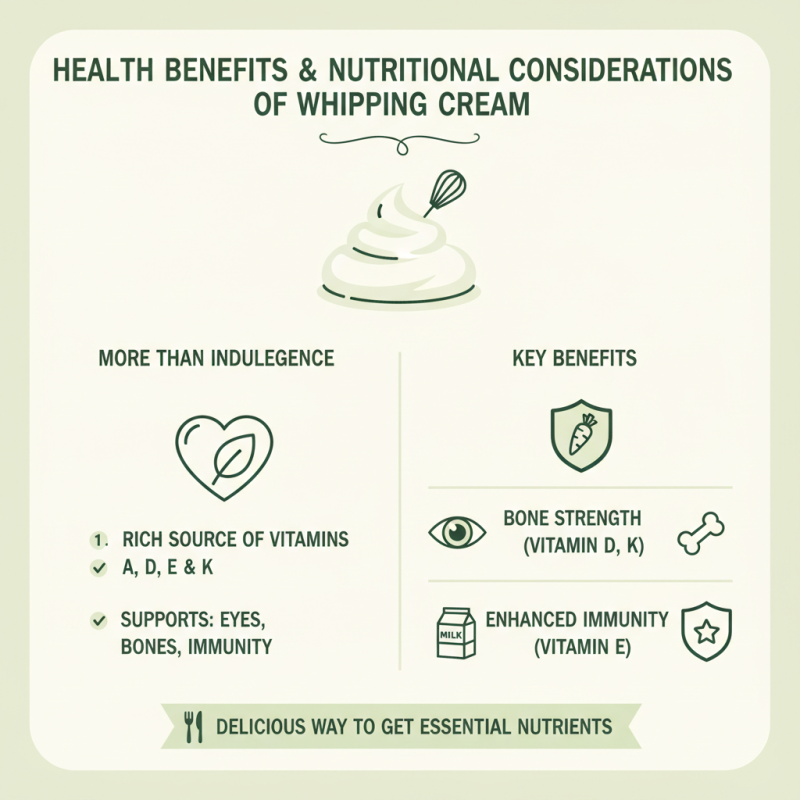
Whipping cream is more than just an indulgent treat. It carries several health benefits worth considering. One notable aspect is its rich source of vitamins. It contains vitamins A, D, E, and K, which are crucial for various body functions. These vitamins support eye health, improve bone strength, and enhance immune function. Incorporating whipping cream into meals can be a delicious way to intake these essential nutrients.
However, nutrition is not just about benefits. Whipping cream is high in calories and fats. Moderation is key. For those watching their weight, it can pose challenges. Opting for smaller portions can help balance enjoyment with health. The richness can enhance dishes, but it’s vital to be mindful. For example, a dollop of whipped cream on fruit can elevate a healthy dessert. Yet, too much can lead to excess calorie intake.
Consider the context of your meals. If you’re making a savory dish, the cream can add depth. In desserts, it can create texture and flavor. Reflecting on your culinary choices helps foster a balanced approach. With thoughtful use, whipping cream can fit into a healthy diet. Just remember, less can be more.
Tips for Choosing the Best Whipping Cream for Cooking
When it comes to culinary applications, whipping cream stands out for its versatility and rich texture. According to a report by the Dairy Farmers of America, 85% of chefs prefer using heavy whipping cream for its ability to hold shapes and enhance flavors. This makes it ideal for both sweet and savory dishes, from delicate mousses to creamy pasta sauces.
Choosing the best whipping cream can be daunting. Look for cream that contains at least 36% fat; this fat percentage is crucial for achieving the desired thickness and stability. Additionally, pay attention to labeling. Avoid creams with additives, as they can alter taste and whipping ability.
For optimal results, keep your whipping cream well-chilled. Cold cream whips better, creating a fluffy texture. Remember to use a clean, metal mixing bowl; it helps maintain cool temperatures. A beneficial tip is to chill your bowl and beaters for a few minutes before whipping. This small detail can significantly improve your final product.
Whipping Cream Usage in Culinary Applications
Common Misconceptions About Whipping Cream in Culinary Use
Whipping cream is a staple in many kitchens, but misconceptions often cloud its use. One prevalent myth suggests that all whipping creams are the same. In fact, there are variations in fat content that affect performance. According to the USDA, heavy whipping cream contains at least 36% fat, which makes it ideal for achieving stable peaks. In contrast, lighter creams may not whip as well, leading to disappointment in recipes.
Another common misconception is that whipping cream is only for desserts. Many professional chefs utilize it in savory dishes as well. A study from the Culinary Institute of America highlighted that incorporating cream into soups and sauces adds richness and complexity. Nevertheless, this versatility is overlooked by home cooks who tend to limit its use.
Additionally, some believe that whipping cream is unhealthy. While it is calorie-dense, it also provides essential nutrients, including Vitamin A and calcium. Moderation is key. Understanding how to use whipping cream can elevate culinary creations. Its application in both sweet and savory realms broadens a cook's repertoire, encouraging creativity in the kitchen.