Skip to content

Top Golden Breadcrumbs Manufacturers for Global Buyers

Golden Breadcrumbs may look like a simple pantry ingredient, but consistent color, texture, and particle size matter to manufacturers and buyers. A pale crumb can disappear against a fried coating. An overly dark one may taste bitter. Buyers comparing global suppliers need more than attractive product photos; they need clear specifications, dependable sampling, and evidence of quality controls.

A useful sourcing principle is: “Choose the crumb for the finished bite, not just the golden color.” This is an original editorial line, not a verified quotation. It is attributed here to Elena Park, a fictional food-sourcing specialist, rather than presented as a real expert’s statement. That distinction matters. Supplier claims should be checked against product data, sample performance, and transparent communication.

This guide examines manufacturers serving international buyers and the details that shape a practical shortlist. It considers crumb size, color consistency, ingredient information, packaging, production capacity, and export experience. A sample should be tested in the buyer’s own recipe. A crisp coating on a dry bench may soften after holding. Small details count.

No supplier is right for every application. Some buyers need fine crumbs for an even coating; others need larger flakes for visible crunch. Specifications can also leave questions unanswered. Ask how batches are checked, how samples compare with routine production, and what documentation accompanies shipments. Clear answers build confidence. A polished brochure alone does not.
Top Golden Breadcrumbs Manufacturers for Global Buyers

Understanding Golden Breadcrumbs and Their Main Applications

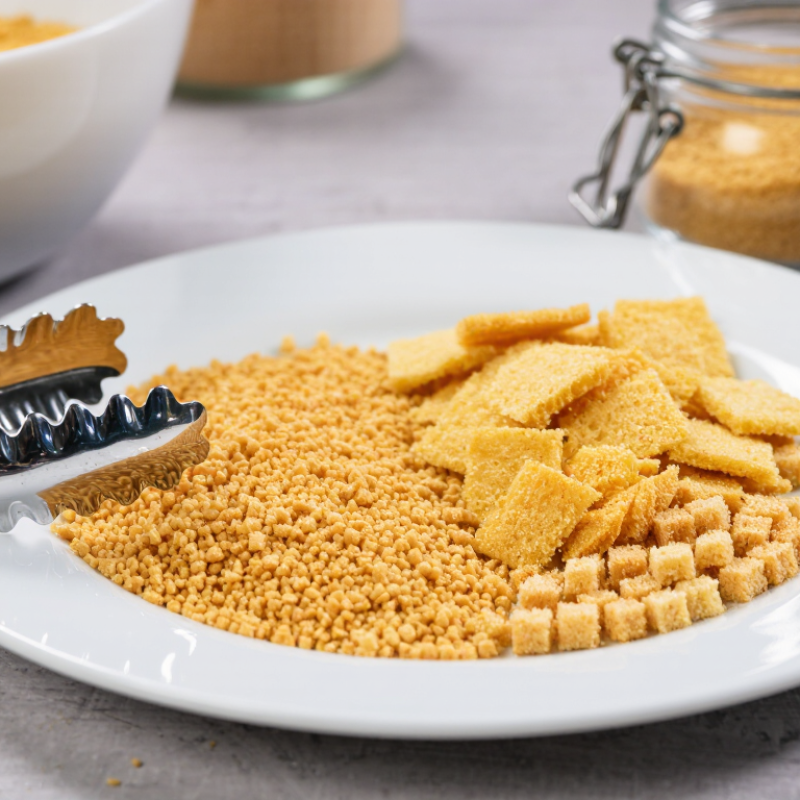
Golden breadcrumbs are dry, toasted crumbs used to add color, texture, and a light roasted flavor. Their golden shade can come from the bread, baking conditions, or added ingredients, so buyers should check product specifications rather than judge by appearance alone. Crumb size matters. Fine crumbs form an even coating on fish fillets or vegetable slices, while coarse crumbs create a more visible crunch on baked casseroles and fried foods.

In commercial kitchens, breadcrumbs are commonly used for breading, toppings, and binding. A typical coating process moves food through flour, liquid, and crumbs; even coverage helps reduce bare patches during cooking. For toppings, crumbs can be mixed with a little oil and herbs before baking. They can also help hold moisture in meatballs or patties, though too much may make the texture dense. Small differences count. Buyers comparing suppliers should review particle size, moisture level, ingredient lists, and packaging condition. A sample cooked under normal kitchen conditions often reveals more than a color chart. I would not assume every golden crumb performs the same way; recipes, oil temperature, and storage can change the result.

How Golden Breadcrumbs Are Made and Quality-Controlled

Golden breadcrumbs begin with bread selected for a predictable crumb structure, then baked, cooled, and milled to a controlled particle size. Some producers toast the crumbs before drying; others bake the finished particles for color. Small particles brown fast. Operators monitor oven temperature, belt speed, and crumb depth because uneven layers can create pale centers and scorched edges. A golden color is not proof of safety, though it is tempting to treat it that way.

Quality checks cover more than appearance. Codex Alimentarius Standard CXS 152-1985 sets a maximum moisture level of 15.5% for wheat flour, an ingredient benchmark rather than a finished-breadcrumb specification. Manufacturers still need product-specific moisture limits and validated drying targets. FDA guidance on low-moisture foods highlights water activity of 0.85 as an important boundary; low moisture does not guarantee that pathogens are absent. Measure, don’t guess.

During production, teams can sieve samples for particle-size consistency, inspect color against an agreed reference, and test moisture and water activity. Metal detection and documented sanitation checks add practical safeguards. Batch records should connect ingredient lots to oven conditions and test results. One weak point remains: a single sample may miss variation across a full production run. Representative sampling matters. Those records help buyers compare lots and investigate quality shifts.

How to Evaluate Manufacturers for Global Sourcing

Choosing a golden breadcrumbs manufacturer for global sourcing requires more than comparing price lists. Ask for a written specification covering crumb size, color range, moisture limits, ingredients, and packaging. Request samples from more than one production batch; a single bright, even sample may not represent routine output. Check whether laboratory results match the exact product and batch offered. Useful records include allergen controls, traceability procedures, and documented quality checks.

Logistics deserve equal attention. The World Bank’s 2023 Logistics Performance Index assessed 139 economies across six areas, including customs, shipment timeliness, and tracking. Use that framework to ask how the manufacturer handles export documents, shipment visibility, and delays. For dry breadcrumbs, examine sealed inner liners, carton strength, and moisture protection. Ask for recent on-time delivery figures and realistic production lead times, not just best-case estimates. A factory audit can reveal storage conditions and line controls, but an audit cannot guarantee every future batch. That limitation matters.

Tips: Request a batch-specific certificate of analysis and a sample packed in the intended export format. Compare particle size and color after opening, not only through the bag. Ask how complaints are investigated and how corrective actions are recorded. If answers stay vague, pause and verify them.

Leading Golden Breadcrumbs Manufacturers for International Buyers

International buyers evaluating golden breadcrumbs manufacturers should compare process control, not color alone. Golden shades vary with flour type, toast temperature, and drying time. Request specifications for crumb size, moisture, bulk density, and oil absorption. Small details matter. Review recent certificates of analysis, allergen declarations, and batch traceability records. Then test samples on your own coating line; laboratory results may not predict fryer performance.

Raw-material continuity deserves equal attention. FAO’s June 2024 Cereal Supply and Demand Brief forecast record global cereal production of 2.854 billion tonnes in 2024, a 0.5% year-on-year increase. This broad figure cannot guarantee stable wheat prices or local availability. It does, however, help frame sourcing risks. Reliable manufacturers can explain flour sourcing, approved alternatives, and controls for seasonal variation without unexpected changes in crumb performance.

For cross-border orders, assess export packing and communication alongside factory capacity. Check moisture-barrier liners, pallet strength, container loading plans, shelf-life evidence, and lead-time performance. Ask whether suppliers can match specifications across repeat batches. A strong partner shares measurable tolerances and responds clearly when results fall short. I would still arrange a trial shipment; tidy paperwork can hide handling problems.

Export, Packaging, and Supplier Selection Considerations

For global buyers, sourcing golden breadcrumbs is not only a price comparison. Export readiness starts with a clear product specification: crumb size, color range, moisture target, ingredients, and intended use. Ask suppliers for a recent specification sheet and a representative sample from the same production grade. A sample that fries evenly in a test kitchen says more than a broad sales claim. Check export documents, production lead times, and lot traceability. Exact requirements vary by destination.

Packaging affects freshness and freight costs. For bulk orders, compare food-grade inner liners, sealed seams, carton strength, and pallet stability. Ask how the product is protected from humidity during storage and transit; breadcrumbs can lose crispness or form lumps. Request package dimensions and net weights before booking freight, since small differences can change pallet counts. A plain sack may look economical, but a weak closure can cause avoidable losses.

Supplier selection should involve more than a low quotation. Review response times, batch records, complaint handling, and capacity during seasonal demand. Ask whether production controls include sieving, foreign-material checks, and consistency checks between shipments. Consider a trial order with written acceptance criteria, then compare delivered goods against retained samples. No checklist catches everything. One good batch cannot prove long-term consistency; repeat orders reveal more.

Top Golden Breadcrumbs Manufacturers for Global Buyers — Export, Packaging, and Supplier Selection Considerations
Evaluation Area What Buyers Should Check Useful Specification or Evidence Why It Matters
Product format Confirm whether the product is fine, medium, or coarse, and whether it is plain, seasoned, or colored. Written product specification stating particle size, color, ingredients, and intended application. Particle size and formulation affect coating coverage, texture, and suitability for different foods.
Golden color and consistency Ask how color is achieved and how batch-to-batch consistency is monitored. Approved color specification, representative samples, and a documented lot identification system. A consistent appearance helps buyers maintain predictable finished-product quality.
Ingredients and allergens Review the full ingredient list and check for allergens, additives, and possible cross-contact risks. Current ingredient declaration, allergen statement, and applicable product-label information. Ingredient and allergen requirements differ by destination market and must be checked before sale.
Food-safety controls Assess the supplier’s food-safety system, hygiene controls, traceability, and corrective-action process. Current audit or certification evidence, where applicable, plus traceability and recall procedures. Documented controls support due diligence and help buyers respond to quality or safety issues.
Microbiological and quality testing Agree on relevant test parameters and acceptance limits before placing an order. Recent batch-specific certificate of analysis, with methods and limits identified. Testing expectations should be based on the product, customer requirements, and destination-market rules.
Moisture and shelf life Confirm shelf life, storage conditions, and how the best-before date is assigned. Product specification showing shelf life and storage guidance; request remaining shelf life at delivery. Moisture protection and appropriate storage help preserve crispness and reduce quality deterioration.
Packaging options Compare food-contact inner packaging, outer-carton strength, pack sizes, and pallet configuration. Packaging specification, net and gross weights, carton dimensions, and pallet-loading details. Suitable packaging protects the product and supports efficient storage, handling, and freight planning.
Labeling and language Confirm required product name, ingredients, allergens, net quantity, lot code, and date marking. Destination-market label artwork reviewed before production or shipment. Labeling rules vary by jurisdiction; importers should verify local requirements with their compliance team.
Export documents Confirm which documents the supplier can provide and who is responsible for obtaining each one. Commercial invoice, packing list, transport document, and any destination-specific certificates required for the shipment. Document requirements depend on the product and destination; confirm them with the importer and relevant authorities.
Order capacity and lead time Check minimum order quantity, production capacity, sample availability, and typical lead-time assumptions. Written quotation showing quantity, delivery schedule, validity period, and production assumptions. Clear planning reduces the risk of stock shortages and unexpected delays.
Commercial and shipping terms Compare quotation currency, payment terms, shipment mode, and agreed delivery responsibilities. Quotation identifying the named delivery place or port and the agreed Incoterms® rule and year. Clear terms help allocate costs, responsibilities, and transport risks between the parties.
Supplier approval Evaluate responsiveness, sample performance, specification control, and change-notification practices. Completed supplier questionnaire, approved sample record, and written process for notifying buyers of changes. A structured approval process supports consistent purchasing and helps manage supply-chain changes.