What is Heavy Whipping Cream and How to Use It in Recipes
In the culinary world, heavy whipping cream is a versatile ingredient that adds richness and flavor to various dishes, from decadent desserts to savory sauces. Chef Julia Hartman, a renowned expert in the field of dairy products, emphasizes the importance of this ingredient by stating, "Heavy whipping cream is the secret to creating that luxurious texture and depth in your cooking." With its high fat content, typically around 36-40%, heavy whipping cream not only elevates the taste of recipes but also provides a delightful creamy consistency that can be whipped into soft peaks or incorporated seamlessly into dishes.
Whether you're using it to whip up a fluffy topping for pies, thickening a creamy soup, or enriching a custard, understanding how to utilize heavy whipping cream effectively can transform your culinary creations. This article will explore the characteristics of heavy whipping cream, its various applications in cooking and baking, and helpful tips to achieve the best results in your recipes. As we delve into the nuances of this beloved ingredient, you'll discover just how essential heavy whipping cream can be for both professional chefs and home cooks alike.
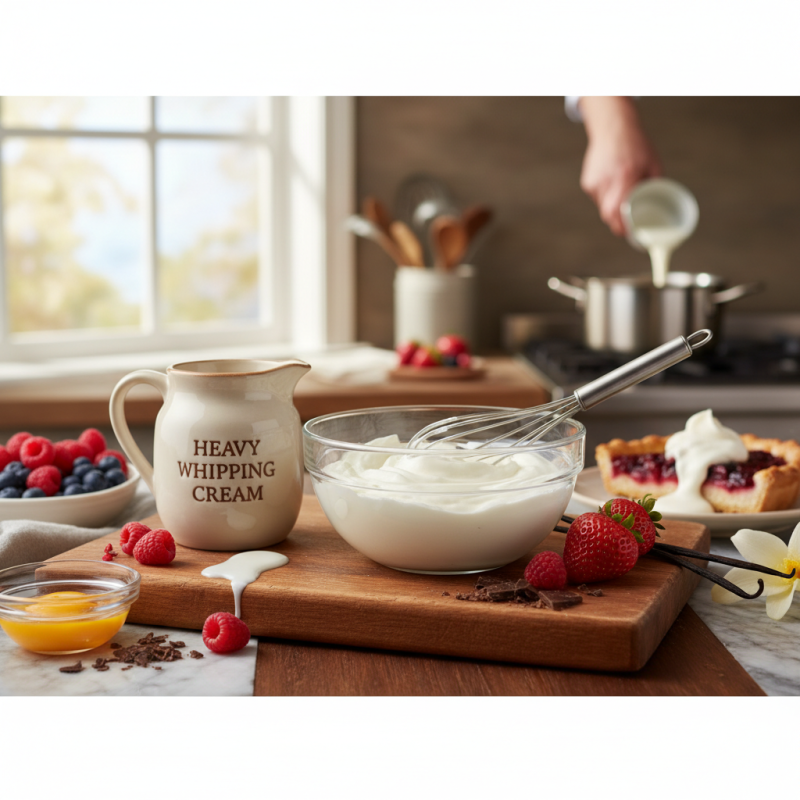
What is Heavy Whipping Cream and Its Characteristics
Heavy whipping cream is a rich dairy product known for its high fat content, typically containing around 36-40% fat. This concentration not only contributes to its luxurious texture but also enhances its ability to be whipped into peaks, making it a favorite among bakers and chefs. The cream is derived from the high-fat layer that rises to the top of fresh milk before it is homogenized, which results in its distinctive velvety smoothness and creamy flavor.
In culinary applications, heavy whipping cream is incredibly versatile. It can be used to create stable whipped toppings for desserts, enriching sauces, and velvety soups. When whipped, it incorporates air and increases in volume, producing a light and airy consistency perfect for topping cakes or adding to coffee. Furthermore, due to its high-fat content, it can withstand heat, allowing it to be incorporated into hot dishes without curdling. This characteristic makes it an essential ingredient in both sweet and savory recipes, elevating flavors and creating delightful textures throughout a wide range of cuisines.
Heavy Whipping Cream Usage in Popular Recipes
Nutritional Value of Heavy Whipping Cream
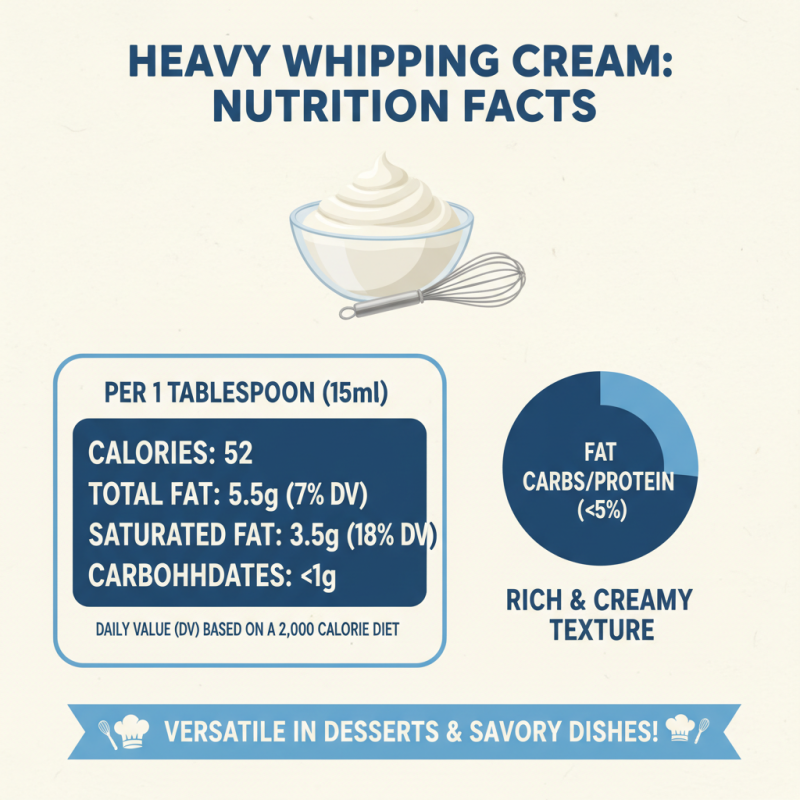
Heavy whipping cream, known for its rich and creamy texture, is a popular ingredient in many recipes, from desserts to savory dishes. Nutritionally, heavy whipping cream is notable for its high-fat content, generally around 36% to 40% fat by weight. According to the USDA FoodData Central, one tablespoon of heavy whipping cream contains approximately 52 calories, 5.5 grams of fat, and less than 1 gram of carbohydrates. This fat content is primarily composed of saturated fats, which contribute to its distinctive mouthfeel and ability to hold stable aeration when whipped.
In terms of vitamins and minerals, heavy whipping cream provides a small amount of essential nutrients. It contains fat-soluble vitamins such as A, D, E, and K, contributing significantly to one’s daily intake if included in a balanced diet. The 2020-2025 Dietary Guidelines for Americans suggest that while dairy products can be part of a healthy diet, it's essential to consume them in moderation, especially high-fat varieties like heavy whipping cream. It is particularly advisable for individuals who are mindful of their saturated fat intake to consider the overall balance of their diet when incorporating heavy cream into their meals.
Common Uses of Heavy Whipping Cream in Cooking
Heavy whipping cream, known for its rich texture and high fat content, serves as a versatile ingredient in a variety of culinary applications.
One of the most common uses of heavy whipping cream is in making decadent sauces and soups. The cream can be simmered to create creamy bases for pasta sauces, enhancing flavor and richness. Additionally, it can be added to soups, providing a luxurious mouthfeel and balancing the flavors of other ingredients.
In baking, heavy whipping cream plays a crucial role in creating desserts like mousses and cheesecakes. When whipped, it incorporates air, resulting in light and fluffy textures that elevate any sweet dish.
Heavy cream is also ideal for custards and puddings, where it adds depth and creaminess. Furthermore, it can be poured over fruits or used to make whipped toppings, transforming simple desserts into indulgent treats. Whether in savory dishes or sweet creations, heavy whipping cream proves to be an essential component in the kitchen.
How to Make Whipped Cream from Heavy Whipping Cream
Heavy whipping cream is a versatile ingredient in the kitchen, prized for its ability to transform recipes with its rich, creamy texture. To make whipped cream from heavy whipping cream, start by chilling your mixing bowl and beaters in the refrigerator for about 15 minutes. This helps the cream whip more effectively. Pour the heavy whipping cream into the bowl, typically around one cup for a generous serving, and begin mixing on medium speed. As the cream thickens, gradually add sugar and vanilla extract for flavor, continuing to whip until soft or stiff peaks form. According to industry reports, the fat content of heavy whipping cream, which ranges from 36% to 40%, plays a crucial role in achieving that perfect, airy consistency.
Tip: For a perfectly sweetened whipped cream, aim for about 2 tablespoons of sugar per cup of heavy cream. Adjust based on your preference for sweetness. If you're looking for a unique twist, consider incorporating flavored extracts or even a pinch of cocoa powder to elevate your whipped cream’s profile.
When using whipped cream in desserts, it can enhance everything from pies to ice creams, providing both a visual appeal and a textural contrast. The air incorporated during the whipping process adds volume, which is essential for delicate meringues or for topping hot beverages. Industry statistics suggest that whipped cream is a fundamental component in many culinary applications, underscoring its popularity and versatility across various cuisines.
What is Heavy Whipping Cream and How to Use It in Recipes
| Dimension |
Description |
Usage Tips |
| Fat Content |
Heavy whipping cream typically contains 36% to 40% fat. |
Choose higher fat content for richer flavor and texture in recipes. |
| Whipping Process |
It can be whipped into soft peaks, stiff peaks, or used as a base for sauces. |
Use chilled utensils for faster whipping. |
| Common Uses |
Used in desserts, soups, sauces, and as a coffee creamer. |
Can be incorporated into cake batters or used as a topping for various dishes. |
| Storage |
Keep refrigerated and use before the expiration date. |
Can be frozen, but may affect texture upon thawing. |
| Substitutes |
Half-and-half or heavy cream can be used as alternatives. |
Adjust the quantities based on desired richness. |
| Whipped Cream Recipe |
Combine heavy whipping cream with sugar and vanilla extract, then whip until desired consistency. |
Serve immediately or store in the refrigerator for up to 24 hours. |
Tips for Incorporating Heavy Whipping Cream in Recipes
Heavy whipping cream is a versatile ingredient commonly used in both sweet and savory dishes. With a fat content of about 36-40%, it is ideal for adding richness and creaminess to recipes. When incorporating heavy whipping cream into your cooking or baking, consider its unique properties: it can be whipped to form peaks, used in sauces, or even incorporated into desserts. According to a report by the U.S. Dairy Export Council, the demand for heavy cream products has surged over the years, illustrating its popularity in various culinary applications.
When using heavy whipping cream in recipes, here are some tips to make the most of this ingredient. First, always chill the cream and your mixing bowl before whipping. Cold temperatures help the cream whip up faster and hold its shape better. If you're making sauces, start by sautéing your base ingredients before adding the cream, allowing the flavors to meld together for a more robust profile. Finally, for desserts, don't hesitate to fold in whipped heavy cream into mixtures like mousses or ganaches to achieve an airy texture. By following these tips, you can elevate your dishes and impress your guests with the rich flavors that heavy whipping cream can offer.