Skip to content

What Is Lowfat Milk and Why Do Global Buyers Choose It?

Lowfat milk remains a familiar product, yet global buyers evaluate it with increasingly careful questions. What does “low-fat” mean in each market? How stable is the supply? Can the product retain a clean taste after long-distance transport? These details matter to importers, retailers, food manufacturers, and families comparing nutrition labels.

Lowfat milk generally contains less milk fat than whole milk, while still providing protein, calcium, and several essential nutrients. Its exact composition can vary by national standards and processing methods. Buyers therefore examine fat percentages, pasteurization records, shelf life, packaging strength, and cold-chain performance. A carton arriving warm in a crowded port is not a minor problem. It can become a commercial loss.

Harvard nutrition researcher Walter Willett has stated, “There is no requirement for humans to consume dairy products.” His view encourages a useful pause. Lowfat milk is not automatically the best choice for every person, and nutrition needs differ. Still, many global buyers choose it because it offers familiar dairy nutrition with a lighter fat profile. Some also value its versatility in schools, cafés, bakeries, and prepared foods.

The market is not perfectly simple.

Price, local taste, climate, and consumer trust all influence purchasing decisions. In some regions, lowfat milk succeeds through dependable quality rather than fashionable branding. In others, buyers may prefer fortified, lactose-free, or plant-based alternatives. A responsible industry assessment must acknowledge these differences instead of presenting one product as universally superior.
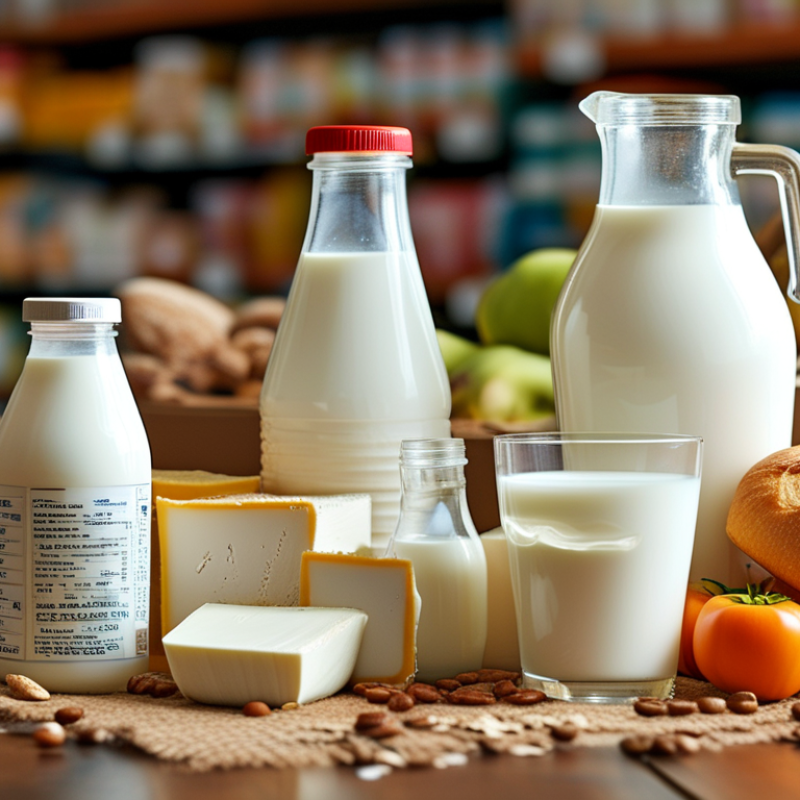
What Is Lowfat Milk and Why Do Global Buyers Choose It?

What Is Low-Fat Milk? Definition and Basic Characteristics

Low-fat milk is dairy milk with part of its natural milk fat removed. In many markets, it contains about 1% fat by volume. However, the exact legal definition can differ between countries. Some regulations classify 2% milk as reduced-fat rather than low-fat. Skim milk contains even less fat, often below 0.5%.

Its basic characteristics are a lighter mouthfeel, a mild creamy taste, and lower fat content than whole milk. It still provides protein, calcium, and other natural milk nutrients, unless processing changes the formulation. Many producers add vitamin A or vitamin D after fat removal. The texture may feel thinner, especially when served cold. That difference matters in drinking milk, bakery mixes, and food-service applications. The category sounds simple, but labels are not always complete.

Tips: Check fat percentage, protein level, pasteurization method, shelf life, and storage temperature. Buyers should also review local labeling rules before comparing suppliers. A longer shelf life is useful, but it does not automatically mean better quality. In practical sourcing work, cold-chain records often reveal more than a sales description. Buyers should request laboratory results for microbiological safety and composition. Taste trials also help, because two low-fat milks can perform differently in coffee or cooking. One limitation deserves attention: “low-fat” does not mean low-calorie or sugar-free. Natural lactose remains unless it has been separately treated.

How Low-Fat Milk Is Produced and Standardized

Low-fat milk begins with careful separation, not simply dilution. Fresh milk enters a centrifuge, where spinning force separates cream from the skim portion. Technicians then recombine these streams to reach a defined fat level, often around 1% or 2%, depending on local standards. Small differences matter. Temperature, cow diet, and processing time can affect the milk’s composition.

The milk is tested for fat, protein, acidity, and microbial quality before standardization is approved. Automated sensors measure the blend continuously, while laboratory checks verify the readings. It is then pasteurized under controlled heat to reduce harmful microorganisms without creating a cooked flavor. Homogenization breaks fat globules into smaller particles, helping prevent cream from rising during storage.

Cold handling remains essential. After processing, the milk moves through sanitized pipes into sealed containers and stays refrigerated throughout distribution. Buyers often request certificates, test records, and consistent specifications because production conditions can vary between seasons. That expectation is reasonable, but no system is perfect. Sampling errors or delayed cooling can still affect quality.

In practical purchasing, a reliable supplier should explain its fat target, testing frequency, shelf-life controls, and transport temperature. Clear records build trust. Fancy claims do not.

Nutritional Profile of Low-Fat Milk

Low-fat milk typically contains 1% or 2% milk fat, depending on local standards. It is not the same as skim milk, which contains much less fat. In a 240-milliliter serving, low-fat milk often provides about 100 to 130 calories. Protein remains close to 8 grams. That matters for buyers comparing beverage bases, school nutrition programs, or household diets. Numbers vary. Processing and national fortification rules can change the label.

Its main minerals are calcium and phosphorus, supporting normal bones and teeth. One serving commonly supplies around 300 milligrams of calcium. Vitamin D may be added, but this is not universal. Vitamin A can also differ after fat reduction and fortification. The natural milk sugar, lactose, usually contributes about 12 grams per serving. It is not automatically a low-sugar drink. Buyers should check total carbohydrate, not only the fat percentage.

From a sourcing perspective, low-fat milk offers a moderate texture with less saturated fat than whole milk. This can suit recipes, cafeterias, and consumers managing energy intake. Still, “healthier” is too broad. Individual needs, allergies, lactose tolerance, and overall diet matter. In practical purchasing reviews, serving size creates easy confusion. A small carton can look nutritionally light while providing a full serving. Reliable decisions require current laboratory data, storage details, and the nutrition panel. A label can correct an assumption.

Why Global Buyers Choose Low-Fat Milk

Low-fat milk usually contains less milk fat than whole milk, often 1% or 2%, depending on local standards. Global buyers choose it because it fits changing nutrition preferences and many food-service menus. In procurement, the decision rarely rests on fat percentage alone. Protein, lactose, microbiological results, heat treatment, packaging, and shelf life also matter.

A hotel buyer may need consistent texture for coffee, cereal, and sauces. A food processor may select low-fat milk powder for predictable blending and portion control. Long-life formats can simplify international distribution when refrigerated routes are limited. However, buyers still verify storage temperatures, carton strength, delivery records, and import requirements. One damaged pallet can affect both cost and customer trust.

Reliable sourcing requires clear specifications, batch traceability, certificates, and suitable laboratory testing. Sensory checks matter too. A clean aroma and smooth mouthfeel can reveal careful handling. Low-fat milk is not automatically better for every consumer; dietary needs differ. It may taste thinner, especially in hot drinks. That weakness deserves honest testing. Some buyers rely too heavily on price forecasts, but consumer preferences can change faster than supply contracts.

What Is Low-Fat Milk and Why Do Global Buyers Choose It?

Dimension Low-Fat Milk Whole Milk Skim Milk Why It Matters to Global Buyers
Common milk-fat level Typically about 1% milk fat in the United States; terminology and legal limits vary by market. At least 3.25% milk fat in the United States. Generally no more than 0.5% milk fat in the United States. Clear fat-level categories help importers match products with local labeling rules, consumer expectations, and retail specifications.
European classification reference Usually corresponds most closely to semi-skimmed milk, which contains approximately 1.5%–1.8% fat under European Union rules. Whole milk contains at least 3.5% fat under European Union rules. Skimmed milk contains no more than 0.5% fat under European Union rules. Buyers must confirm the destination market’s definition because “low-fat,” “reduced-fat,” and “semi-skimmed” are not interchangeable worldwide.
Energy per 100 g Approximately 42 kcal Approximately 61 kcal Approximately 34 kcal Lower energy density supports products positioned for calorie-conscious diets, institutional foodservice, and everyday consumption.
Total fat per 100 g Approximately 1.0 g Approximately 3.25 g Approximately 0.1 g About 1% fat offers a middle position between whole and skim milk, balancing lighter nutrition with a more familiar milk texture.
Protein per 100 g Approximately 3.4 g Approximately 3.2 g Approximately 3.4 g Fat reduction does not materially eliminate milk protein, which supports use in beverages, school meals, bakery applications, and prepared foods.
Carbohydrate per 100 g Approximately 5.0 g, primarily lactose Approximately 4.8 g, primarily lactose Approximately 5.0 g, primarily lactose Low-fat milk remains nutritionally similar to other dairy milks in naturally occurring lactose content.
Calcium per 100 g Approximately 125 mg Approximately 113 mg Approximately 122 mg Low-fat milk can provide substantial calcium while containing less fat than whole milk, supporting nutrition-focused product positioning.
Typical processing approach Milk fat is separated and then standardized to the required fat level; pasteurization or ultra-high-temperature treatment may follow. Milk is standardized to retain the higher natural fat level and then heat-treated. Most milk fat is removed before standardization and heat treatment. Standardization improves consistency across batches, which is important for cross-border procurement and formulation control.
Texture and flavor profile Less creamy than whole milk, but generally fuller than skim milk. Richest and creamiest of the three categories. Lightest body and least creamy mouthfeel. Low-fat milk is often selected as a compromise between sensory appeal and lower-fat positioning.
Common buyer applications Retail drinking milk, school and institutional catering, coffee beverages, cereals, bakery products, and food manufacturing. Premium drinking milk, desserts, sauces, coffee applications, and products where richness is important. Low-calorie beverages, diet-oriented foodservice, reconstituted dairy products, and selected industrial recipes. Its broad application range can help buyers serve multiple end-use segments with one standardized milk category.
Main purchasing advantages Moderate fat content, familiar taste, useful protein and calcium levels, and broad consumer acceptance. Strong flavor and texture, but higher fat and energy content. Lowest fat and energy content, but a lighter body and flavor. Global buyers commonly consider low-fat milk when they want a practical balance among nutrition, taste, formulation performance, and marketability.
Important compliance checks Verify the permitted fat range, nutrition declaration, allergen statement, treatment method, shelf-life requirements, and import documentation in the destination market. Verify whole-milk fat standards and labeling requirements. Verify skim-milk fat limits and any rules governing nutrient fortification. Regulatory verification is essential because product names, fat thresholds, and labeling conventions differ between countries and regions.
Data basis: Nutrition values are rounded typical values per 100 g for unflavored dairy milk and can vary by processing, fortification, and national composition standards. Classification references are based on U.S. Food and Drug Administration milk standards and European Union milk-fat categories.
Reference sources: USDA FoodData Central | U.S. FDA Standards of Identity for Milk | European Union Regulation (EU) No 1308/2013

Key Factors in Sourcing and Evaluating Low-Fat Milk

What Is Lowfat Milk and Why Do Global Buyers Choose It?

Key Factors in Sourcing and Evaluating Low-Fat Milk

Low-fat milk is not defined identically in every market. In the United States, FDA standards classify milk with 1% milkfat as low-fat. Skim milk contains less than 0.5% milkfat. Buyers should confirm the destination country’s legal definition before negotiating specifications. This small detail can prevent costly relabeling.

Fat content is only one purchasing factor. Professional buyers usually review protein, solids-not-fat, acidity, microbial counts, antibiotic-residue results, and shelf life. The OECD-FAO Agricultural Outlook 2024-2033 projects global milk production to grow steadily through 2033. This growth may increase supply, but it will not remove quality differences between origins. A clear certificate of analysis is essential. So is independent laboratory verification.

Cold-chain performance deserves practical attention. A shipment may meet its fat specification yet arrive with oxidation, leakage, or temperature abuse. Buyers should examine collection procedures, pasteurization records, tank sanitation, packaging strength, and temperature logs. The International Dairy Federation emphasizes hygienic production and controlled storage in its dairy safety guidance. However, documentation is not proof by itself. A buyer’s receiving team should inspect seals, cartons, odor, texture, and batch codes. One overlooked weakness can damage an otherwise reliable supply plan.

What Is Low-Fat Milk and Why Do Global Buyers Choose It?

Low-fat milk generally includes 1% and 2% milk. Compared with whole milk, it provides similar protein and carbohydrate levels with less fat and fewer calories, making it easier to position for health-focused and calorie-conscious consumers.

Nutritional values are approximate amounts per 244 g cup, based on USDA FoodData Central reference data. Buyers should also evaluate shelf life, cold-chain requirements, fortification, certifications, packaging, and regulatory compliance when sourcing.