10 Tips for Choosing the Best Lowfat Milk Options for Your Diet
Lowfat milk is gaining popularity among health-conscious consumers. According to a recent report by the Dairy Research Institute, lowfat milk options have seen a 15% increase in sales over the last five years. Many individuals are seeking healthier dairy alternatives that align with their dietary goals. Yet, the choice can be overwhelming.
Selecting the best lowfat milk involves understanding nutritional labels and ingredient lists. Recent studies reveal that nearly 40% of consumers often overlook the sugar content in these products. This oversight can lead to unintended calorie intake, which may counteract health objectives. Some brands boast added vitamins but may lack essential nutrients, making it crucial to read beyond the front label.
Lowfat milk can enhance your diet, providing essential nutrients like calcium and protein. However, not all options are created equal. A common mistake is focusing solely on fat content while ignoring other vital factors. For instance, a brand may be low in fat but high in additives. Reflecting on these choices can lead to better health outcomes and more informed consumption of lowfat milk alternatives.
Choosing the Right Type of Lowfat Milk: Understanding Fat Content Variations
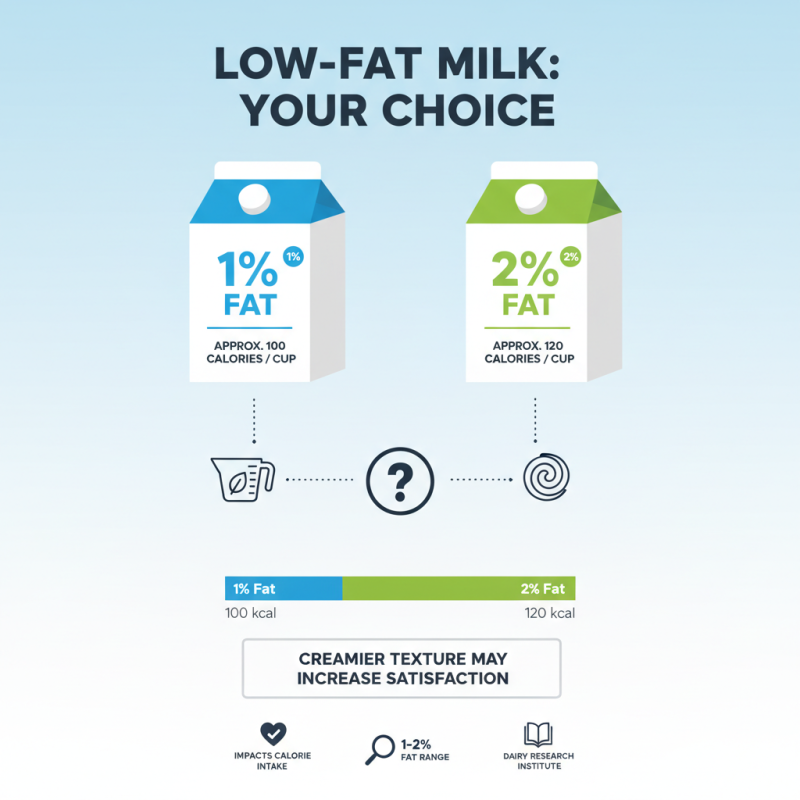
Choosing lowfat milk can be challenging due to the different fat content variations. Generally, lowfat milk ranges from 1% to 2% fat. A report by the Dairy Research Institute indicates that the choice of fat content impacts your overall calorie intake. For instance, 1% milk contains about 100 calories per cup, while 2% has around 120 calories. Some individuals may find the creaminess of 2% more satisfying, potentially leading them to consume less overall.
There are also differences in taste and texture. Research suggests that people often prefer the flavor of higher fat milk. This preference can lead to overconsumption of calories if you don’t watch serving sizes. When choosing lowfat options, consider your dietary goals. A person aiming for weight loss may opt for 1% milk, while someone focusing on muscle gain might prefer 2% for added calories.
Another aspect to think about is how your body reacts. Everyone metabolizes fats differently, and fat content can affect digestion. Some may experience discomfort from high-fat options, while others feel less satisfied with lower fat. Monitoring your body's response can guide better choices.
Nutritional Comparisons: Lowfat Milk vs. Whole Milk and Skim Milk
When comparing low-fat milk to whole and skim milk, several nutritional metrics stand out. Low-fat milk typically contains 1% to 2% fat, while whole milk has about 3.25% fat. Research indicates that a cup of low-fat milk provides around 100 calories and 8 grams of protein, similar to whole milk. However, it has less saturated fat, which can be beneficial for heart health.
Skim milk, on the other hand, contains less than 0.5% fat. A typical serving offers about 80 calories. While skim milk has fewer calories, it lacks the creaminess that many find appealing. Additionally, studies show that low-fat milk often retains more of the beneficial fat-soluble vitamins than skim milk. Notably, vitamins A and D are better absorbed in low-fat options compared to nonfat variants.
Nutritional preferences vary greatly. Some may need lower calorie options but might miss out on flavor. Others may opt for whole milk for its richness, but it does contain higher saturated fat. Understanding these trade-offs is essential. Balancing taste, calories, and nutrition can be tricky. Choosing the right milk often comes down to personal health goals and taste preferences.
Evaluating Calcium and Vitamin Fortification in Lowfat Milk Options
When choosing lowfat milk options, it's crucial to evaluate the calcium and vitamin fortification. Calcium is essential for strong bones. Many lowfat milks are fortified with additional calcium. This can be beneficial, especially for those who avoid dairy.
Look for labels that specify calcium content. Some options may offer more calcium than regular milk. Consider how this fits into your overall diet. If you rely on lowfat milk for calcium, ensure you choose brands that provide adequate amounts.
Vitamin D is another vital nutrient often added to lowfat milk. It aids calcium absorption. However, not all lowfat milks are fortified with vitamin D. This can be a concern for some. You might want to double-check the labels before making a choice. A lack of fortification may lead to deficiencies over time. Balancing your intake of these nutrients should be a priority.
10 Tips for Choosing the Best Lowfat Milk Options for Your Diet
| Milk Option |
Calcium Content (mg per 1 cup) |
Vitamin D Fortified (Yes/No) |
Protein Content (g per 1 cup) |
Calories per Serving |
| Lowfat Milk (1%) |
300 |
Yes |
8 |
100 |
| Skim Milk (0%) |
300 |
Yes |
8 |
80 |
| Lowfat Chocolate Milk |
290 |
Yes |
8 |
150 |
| Lowfat Soy Milk |
300 |
Yes |
7 |
100 |
| Lactose-Free Lowfat Milk |
300 |
Yes |
8 |
100 |
Reading Labels: Identifying Added Sugars and Preservatives in Milk
When choosing lowfat milk, reading labels is essential. Many brands add sugars and preservatives to enhance flavor. For example, a 2021 report found that 70% of flavored lowfat milk contains added sugars. This can significantly increase calorie intake.
Tip: Always check the ingredient list. Look for terms like “high fructose corn syrup” or "sucrose." These indicate added sugars. A healthier option should have minimal ingredients. Ideally, it should contain just milk and vitamins.
Preservatives are another consideration. Common additives include carrageenan and mono-diglycerides. Research suggests some people may react negatively to these substances. Even in small amounts, they can lead to digestive discomfort.
Tip: Prefer products labeled as "organic" or "no artificial additives." These options are often free from unwanted chemicals. However, they can be more expensive. Always weigh the costs against potential health benefits.
In the end, making informed choices requires diligence. The more you read labels, the better you can navigate lowfat milk options. A thoughtful approach to your diet can lead to improved health outcomes.
Understanding Lactose-Free Lowfat Milk: Benefits for Lactose Intolerance
Lactose intolerance affects many individuals worldwide. For those who struggle with this condition, lactose-free lowfat milk provides a great alternative. It retains essential nutrients, making it a valuable addition to a balanced diet. This milk undergoes a special process that breaks down lactose, allowing easier digestion.
Choosing lowfat milk can also support heart health while still offering protein and calcium. Many people find that lactose-free options taste just as good as regular milk. Some might still hesitate. It can be hard to let go of familiar flavors. However, exploring different brands may reveal varied taste profiles, making the transition smoother.
When selecting lowfat milk, check labels for added sugars. Some products may have unnecessary ingredients. Also, try to buy milk fortified with vitamins D and A. These vitamins enhance the nutritional value, providing better health benefits.
Making small changes is often necessary for a healthier lifestyle. It's an opportunity to reflect on your dietary choices and how they align with your wellness goals.