A Stand Up Pouch can make a product easier to display, store, and use, but the right style depends on what goes inside. Buyers comparing the top ten types should look beyond appearance. Product weight, moisture sensitivity, shelf life, filling method, and opening habits all matter. A pouch that works well for coffee may not suit pourable sauce or pet treats. Details count.
This guide introduces common options, including windowed, gusseted, spouted, zipper, foil, kraft, and recyclable designs. Each offers trade-offs. A clear window can show the product, while a high-barrier structure may better protect sensitive contents. A spout can simplify pouring. A zipper can support repeated use, though it does not replace a reliable initial seal. A pouch holding powder also needs clean dispensing and enough room for a scoop. Small choices matter.
Before requesting samples, confirm the pouch dimensions, material structure, closure, and filling equipment with your packaging supplier. Ask how the package performs under real storage and shipping conditions, not just on a display shelf. Test it. Check the seal. If sustainability claims matter, review the exact material composition and local recycling access rather than relying on a broad label. No pouch is ideal for every product. Some trade-offs are easy to miss, and even experienced buyers may need to revise a choice after testing. The following ten types offer a practical starting point for comparing function, presentation, and cost.
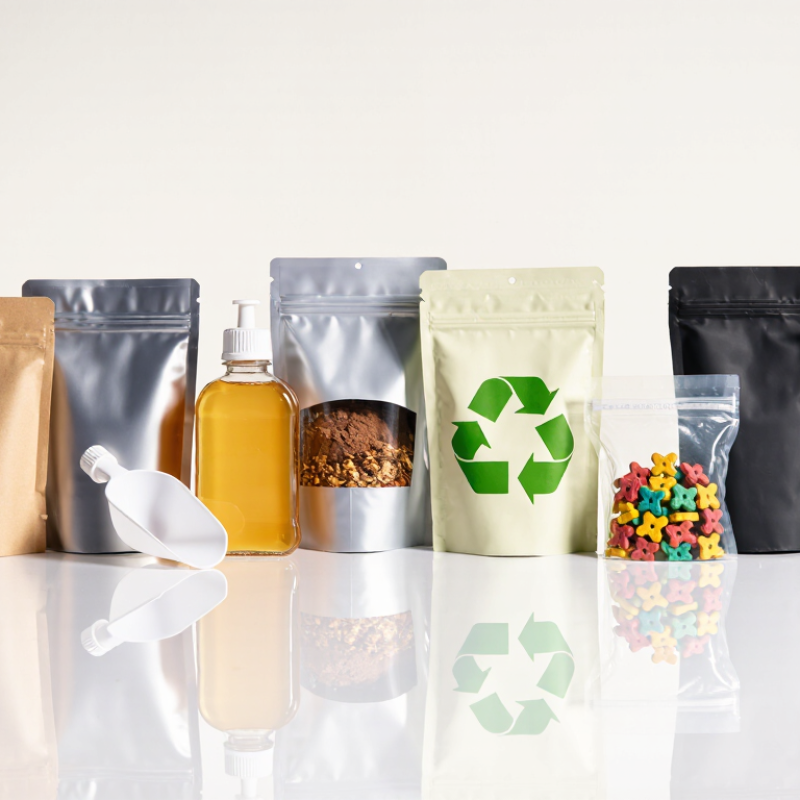
A stand-up pouch combines a flexible body with a bottom gusset that opens into a flat base. That base matters. It helps the pouch stay upright on a shelf, while a zipper or tear notch can make opening and reclosing easier. Common structures use layers of film, each serving a different job: a printable outer layer, a barrier layer, and a heat-sealable inner layer. The exact stack depends on the product. A dry snack may need less protection than a powder sensitive to moisture or a product vulnerable to oxygen.
Material choice affects appearance, protection, and end-of-life options. The Flexible Packaging Association’s 2023 State of the U.S. Flexible Packaging Industry report estimated industry sales at $42.9 billion in 2022. That figure covers flexible packaging broadly, not stand-up pouches alone. Still, it signals a substantial packaging sector. Buyers should specify barrier needs, fill temperature, seal strength, and storage conditions before choosing a film structure. A clear window can show the product, but may reduce light protection. It is easy to over-specify. Ask suppliers for test data using the intended product and filling line; a pouch that looks sturdy on a sample table may behave differently during production.
Stand-Up Pouch Basics: Structure, Materials, and Shelf Display
Barrier level is a qualitative guide to the protection commonly required for each pouch application, not a standardized performance rating. Actual protection depends on the laminate, seals, product, and storage conditions. Stand-up bases, zippers, spouts, and windows can be combined with different material structures.
Top 10 Types of Stand Up Pouches for Buyers
A pouch’s shape matters, but its barrier layers and closure often matter more. Foil or high-barrier laminates can help limit exposure to oxygen, moisture, and light. This can protect aroma, texture, and shelf life when the structure suits the product. The Flexible Packaging Association’s 2023 State of the U.S. Flexible Packaging Industry report valued the sector at $42.9 billion in 2022, underscoring how widely these formats are used. That figure does not guarantee performance: buyers still need product-specific testing. A clear window improves visibility, but may admit light. A zipper helps with repeated use, yet it cannot replace a sound heat seal.
Tips: Match the barrier to the product’s main risk. Ask suppliers for oxygen and water-vapor transmission data, then test filled pouches under expected storage conditions. Check seals after shipping, too. Small details matter.
For powders, a wide opening can make pouring cleaner; for snacks, a zipper can help reduce spills between servings. A bottom gusset keeps the pouch upright, but a narrow base may feel unstable when full. Consider tear notches, opening force, and whether customers can reseal the pack with one hand. It is tempting to choose the pouch with the most features. That can add cost without solving the real problem. Compare protection, filling-line compatibility, and everyday handling together.
Protection depends on the complete pouch structure, seal quality, and filling conditions—not just the pouch style. Confirm barrier, food-contact, shelf-life, and regulatory requirements with your packaging supplier.
| Pouch Type | Typical Construction or Feature | Protection Considerations | Usability Benefits | Common Applications | Buyer Check |
|---|---|---|---|---|---|
| 1. Standard zipper pouch | Flexible laminate with a bottom gusset and press-to-close zipper; often supplied with a separate top seal. | The laminate can be selected for moisture, oxygen, or light protection. The zipper supports repeated closure but is not a substitute for the initial heat seal. | Stands upright on shelves and is easy to open and reclose after first use. | Snacks, dried foods, powders, and pet treats. | Check zipper performance, seal width, fill volume, and whether the product needs a tear notch. |
| 2. Spouted pouch | Flexible pouch with a fitment and screw cap, usually positioned at a top corner or center. | Suitable laminate and well-made fitment seals help contain liquids. Compatibility with the product and filling process is essential to reduce leakage risk. | Allows controlled pouring or dispensing and can be recapped between uses. | Sauces, purees, beverages, and liquid detergents. | Test fitment-seal integrity, cap compatibility, dispensing rate, and leak resistance in transport. |
| 3. Window pouch | Stand-up pouch with a transparent panel or window within an otherwise printed or opaque structure. | The window may allow more light exposure than an opaque barrier layer. Protection varies with window size, material, and the rest of the laminate. | Lets shoppers see the product without opening the package. | Pasta, grains, confectionery, and visually appealing dry goods. | Confirm the window material and size meet the product’s light and shelf-life requirements. |
| 4. Retort pouch | Heat-resistant, multilayer flexible structure designed for a validated retort process. | Can be used for commercially sterilized foods when the pouch, seals, and scheduled thermal process are properly validated together. | Lightweight packaging that can provide a ready-to-heat format; opening features may be added. | Shelf-stable meals, soups, sauces, and some pet foods. | Require process validation, retort-compatible seals, and testing for flex cracking and delamination. |
| 5. Foil high-barrier pouch | Laminate incorporating an aluminum foil layer, often combined with polymer sealing layers. | Intact foil provides a strong barrier to light, oxygen, and moisture; pinholes, folds, and seal defects can reduce package performance. | Suitable when strong protection is more important than visibility of the contents. | Coffee, powdered products, and light- or oxygen-sensitive dry goods. | Ask for barrier data for the finished structure and assess puncture resistance and disposal requirements. |
| 6. Kraft-look pouch | Paper outer layer combined with inner polymer layers; some versions use a foil or other barrier layer. | Paper alone is not a reliable moisture or oxygen barrier. Protection comes from the inner layers and the quality of the seals. | Offers a paper-like appearance and can be printed; zipper and tear-notch options are common. | Tea, coffee, dry snacks, and specialty dry foods. | Check the actual layer composition, barrier data, and local recycling or disposal options. |
| 7. Clear high-barrier pouch | Transparent multilayer film, sometimes using coated or high-barrier polymer layers instead of foil. | May provide enhanced oxygen or moisture control while remaining transparent, but performance varies by material and does not necessarily block light. | Combines product visibility with a stand-up format. | Dried fruit, nuts, snacks, and products where appearance matters. | Compare oxygen and water-vapor transmission data and check whether light protection is needed. |
| 8. Child-resistant pouch | Stand-up pouch fitted with a closure designed to meet an applicable child-resistance test standard. | Product protection depends on the pouch laminate and seals; child-resistant closure performance is a separate safety consideration. | Can help provide restricted access while remaining usable by adults when properly designed and tested. | Products subject to child-resistant packaging rules in relevant markets. | Verify applicable local regulations, independent testing, labeling, and reclosure performance. |
| 9. Shaped pouch | Pouch cut into a custom outline while retaining a bottom gusset or other stand-up base. | Uses the selected laminate for barrier protection; unusual edges and shapes can affect seal layout and usable fill volume. | Distinctive shelf presentation and potential ergonomic or product-specific handling features. | Confectionery, personal-care products, and promotional formats. | Review stability, seal area, packing-line compatibility, and the impact of shape on shipping efficiency. |
| 10. Flat-bottom stand-up pouch | Pouch with a broad, flat base and side or bottom gussets that create a box-like shape. | Protection is determined by the laminate and seal construction. Additional folds and corners should be considered during seal and distribution testing. | Stable on shelves and can provide a broad front panel for product information. | Coffee, dry foods, pet food, and larger retail packs. | Check filled-pack stability, usable capacity, case packing, and fit with the filling equipment. |
Buyers often compare stand-up pouches by bottom structure and opening style. A Doyen pouch has a curved bottom seal and suits lighter products such as dried fruit. A K-seal bottom supports heavier fills, while plow-bottom designs can provide a stable base. Flat-bottom pouches stand upright with a broad base and squared sides. Side-gusset versions offer extra capacity, though their filled shape can vary with product weight. Small details matter.
Closure and barrier options create another five common comparisons. Zipper pouches allow repeated opening; spouted pouches make pouring easier for liquids. Tear-notch designs open quickly but may not reseal. Window pouches show the contents, yet the clear panel can reduce light protection. Retort pouches use heat-resistant structures for foods processed after sealing. Ask suppliers for samples filled with your actual product, not just empty display bags. Check seal strength, shelf stability, and how easily the pouch stands after handling.
A tidy sample can mislead.
Even experienced buyers sometimes overlook how a greasy powder or sharp snack affects seals over time. Inspecting filled samples under realistic storage conditions is a practical safeguard.
A stand-up pouch should solve a product problem, not just look good on a shelf. Match the closure to how customers use the contents: resealable zippers suit snacks and dry mixes, while spouts make pourable sauces easier to dispense. Flat-bottom pouches can provide a stable display for heavier products. For coffee, spices, or light-sensitive ingredients, compare high-barrier laminates that limit oxygen and light exposure. Keep it practical. The Flexible Packaging Association’s 2023 State of the Industry report valued U.S. flexible-packaging sales at about $42.9 billion in 2022, showing the scale of a category where material and format choices matter.
Product conditions narrow the options further. Retort pouches are designed for products that undergo in-package heat processing; confirm the structure and seal can withstand the exact process. A clear window may help shoppers inspect contents, but it can reduce protection from light. That trade-off matters. For powders, test zipper performance after repeated opening, since fine particles can lodge in the seal. For liquids, assess spout placement, leak resistance, and pouring control with the actual fill. A small sample run is useful: pouch dimensions, fill weight, and shelf life can change how a format performs. Paper-look finishes may appeal visually, but they do not automatically provide the barrier a product needs.
Buyers evaluating stand-up pouches should match the structure to the product, filling method, and expected shelf life. A dry snack may need a moisture barrier, while an oily product can require different material performance. Check the laminate specification, pouch dimensions, bottom gusset, zipper, and seal area. Small details matter. A sample filled on the intended line can reveal awkward handling or weak seals before a large order is placed.
Price comparisons work best when quotes use the same pouch size, material thickness, printing coverage, and order quantity. Ask suppliers to separate unit price from setup charges, freight, and any sampling costs. Also check minimum order quantities, production lead times, and how they handle defects. The lowest unit price may not be the lowest total cost. Even a tidy spreadsheet can miss waste during filling; that estimate deserves a second look.
Supplier evaluation should include clear material specifications, consistent sample quality, and realistic answers about production capacity. Request relevant test documentation for the intended product, and confirm that quoted features—such as a zipper or tear notch—appear on the approved sample. Communication is evidence, too: vague replies about tolerances or delivery dates are worth noting. No checklist removes every risk, but written specifications make disagreements less likely. A small pilot order can still be imperfect, yet it gives buyers useful data before scaling.