Skip to content

Top French Fries Modeling Gummy Candy Manufacturers

French Fries Modeling Gummy Candy turns a familiar fast-food shape into a playful confectionery product. Its appeal depends on more than visual accuracy. Buyers also assess flavor balance, texture, packaging safety, production consistency, and manufacturing transparency. This guide introduces leading French manufacturers associated with innovative gummy development and private-label confectionery production. It focuses on practical evidence rather than attractive product photos alone.

The review considers mold precision, ingredient sourcing, food-grade processing, and quality-control procedures. A convincing fry-shaped gummy should show clean edges, realistic proportions, and a soft but stable bite. Details matter. Manufacturing teams may use gelatin or pectin, depending on dietary positioning and texture goals. They should also explain allergen management, traceability, batch testing, and packaging controls. Certifications can support trust, but buyers should verify their scope and validity directly. A certificate alone proves little.

Factory experience remains important. Established producers often understand seasonal demand, export documentation, and customized color or flavor development. Still, no supplier is perfect. A polished sample may not reflect large-scale production. Small differences in color, firmness, or coating can appear between batches. That limitation deserves attention. The most reliable comparison combines factory communication, sample testing, technical documents, and clear commercial terms. Readers should treat this overview as a starting point, not a final purchasing decision. Each manufacturer requires independent verification before a long-term partnership begins.
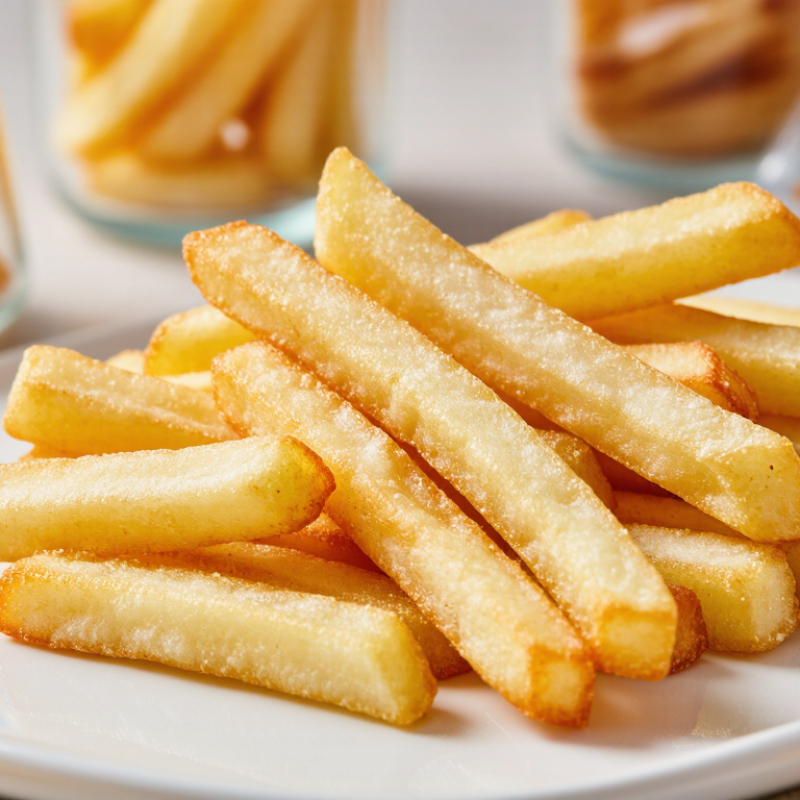
Top French Fries Modeling Gummy Candy Manufacturers

French-Fry Modeling Gummy Candy: Definition, Ingredients, and Product Standards

French-Fry Modeling Gummy Candy: Definition, Ingredients, and Product Standards

French-fry modeling gummy candy is a chewy confection molded to resemble a fried potato strip. Its appeal comes from visual accuracy, playful texture, and familiar flavor cues. The product may use gelatin or pectin for structure. Sugar, glucose syrup, water, and food-grade acids form the basic recipe. Natural or permitted colors create golden surfaces and lighter centers. Flavor systems can suggest potato, salt, vanilla, or mild fruit notes.

Texture Control

Texture needs careful control. The candy should bend without collapsing and chew without sticking excessively. In production trials, moisture balance often causes the biggest variation. Too much moisture weakens the shape. Too little creates a hard bite.

Starch dusting can reduce surface tack, but excess starch may leave a dull mouthfeel. Small size differences also affect drying time and package appearance.

Product Standards and Quality Assurance

Reliable manufacturers should verify ingredient specifications, allergen information, color limits, microbiological safety, and shelf-life performance. Good manufacturing practices, documented sanitation, batch traceability, and routine laboratory testing support consistent production.

Product standards can differ by market, so labels and claims require local regulatory review. Packaging should protect the gummies from heat, humidity, and crushing. A convincing fry shape is valuable, but it is not enough. Some batches may look excellent yet feel too firm. That weakness deserves honest testing and adjustment before release.

Global Gummy Candy Market: 2023 Value and 2024–2030 CAGR Data

Top French Fries Modeling Gummy Candy Manufacturers

The global gummy candy market was valued at approximately USD 19.2 billion in 2023, according to broad confectionery market estimates. Forecasts suggest a compound annual growth rate near 12.7% from 2024 to 2030. These figures vary by research method. Some reports count functional gummies, while others measure only sugar-based candy.

French fries modeling is gaining attention because it combines familiar shape with playful presentation. Manufacturers use starch molding, temperature-controlled cooking, and food-grade color systems to create realistic fry-like pieces. Crisp edges, pale centers, and red dipping-style details can improve shelf appeal. Texture still matters more than appearance. A gummy that looks accurate but feels overly sticky may receive weak repeat purchases.

Manufacturers should track portion size, packaging efficiency, and regional taste preferences. Small sample testing can reveal whether consumers prefer softer pieces or firmer bites. Data from 2024 to 2030 indicates strong category potential, but growth is not guaranteed. Forecasts are not promises. Rising sugar concerns, ingredient costs, and changing retail habits may reduce actual performance. Better market analysis should separate novelty demand from regular consumption. That distinction is easy to miss.

Top French Fries Modeling Gummy Candy Manufacturers — Global Gummy Candy Market Value and 2024–2030 CAGR Outlook

The global gummy candy market is estimated at approximately US$20.5 billion in 2023. Applying a reported compound annual growth rate of 12.5% for 2024–2030 produces an estimated market value of approximately US$45.4 billion by 2030. Annual values shown for 2024–2030 are CAGR-derived estimates and represent the overall market, excluding company- or brand-level data.

Manufacturing Process: Molding Accuracy, Cooking Temperatures, and Yield

Top French Fries Modeling Gummy Candy Manufacturers

Manufacturing Process: Molding Accuracy, Cooking Temperatures, and Yield

High-quality French fries modeling gummy candy begins with accurate cavity design. The mold must preserve thin edges, even length, and a recognizable crisp shape. In pilot production, a cavity tolerance near ±0.3 millimeters can reduce visible defects. That sounds small. It is not. Slight misalignment may create bent pieces or uneven tips.

A calibrated depositor fills each cavity with consistent weight. Operators should check sample pieces from the beginning, middle, and end of every run. Syrup temperature needs close control, often around 108–112°C, depending on the formula and solids level. Higher heat may darken the candy or toughen its texture. Lower heat can leave excess moisture. Those figures are useful references, not universal rules. Each recipe requires validation with a calibrated thermometer and moisture testing.

Yield depends on more than ingredient weight. Teams should record syrup input, finished candy weight, trimming loss, and pieces rejected after inspection. A practical batch sheet exposes hidden waste. One weak point remains common: attractive samples can hide poor production efficiency. A batch may look excellent while losing too much candy in the mold, cooling belt, or packaging area. Better records help, but they do not replace hands-on checks. Temperature drift, worn molds, and rushed demolding still require experienced judgment.

Top French Fries Modeling Gummy Candy Manufacturers - Manufacturing Process: Molding Accuracy, Cooking Temperatures, and Yield
Process Stage Key Dimension or Control Point Typical Operating Range Recommended Target Verification Method Effect on Product Quality and Yield
Ingredient Preparation Gelatin or pectin hydration Hydration temperature: 20–60 °C, depending on the gelling system Uniform hydration with no visible lumps Visual inspection, mixing-time record, and viscosity check Incomplete hydration can cause weak gel structure, surface defects, and higher rejection rates.
Sugar Syrup Cooking Soluble-solids concentration Approximately 75–82 °Brix before final adjustment Consistent °Brix for every batch Calibrated refractometer at a controlled sample temperature Low solids may produce sticky candy and poor demolding; excessive solids may create hard texture and shrinkage.
Syrup Cooking Cooking temperature Approximately 105–125 °C, formulation dependent Use the validated temperature profile for the selected recipe Sanitary temperature probe with batch-record logging Overheating can darken the syrup and damage flavor; undercooking increases residual moisture and reduces shelf stability.
Gel Addition Gelatin or pectin addition temperature Commonly about 60–90 °C, depending on the gelling agent Low enough to protect the gel system but high enough for complete dispersion In-line or batch temperature measurement Excessive heat can reduce gel strength, while insufficient heat may create unmixed particles and inconsistent texture.
Color and Flavor Mixing Mixing uniformity Typically 3–10 minutes after ingredient addition No visible color streaks or flavor concentration zones Color comparison, sensory inspection, and periodic sampling Uniform mixing improves visual consistency and reduces batches rejected for shade or flavor variation.
Depositing Deposit temperature and viscosity Often about 70–95 °C for cooked gummy masses Stable flow without premature setting or excessive stringing Temperature log, deposit-weight check, and nozzle inspection Incorrect viscosity affects cavity filling, piece weight, tip definition, and mold-to-mold consistency.
French-Fry Shape Molding Cavity fill accuracy Target fill level generally within ±2–5% of the cavity volume Complete filling of the fry-shaped cavity without overflow Visual cavity inspection and filled-piece weight measurement Underfilling causes short or incomplete pieces; overfilling creates flash, sticking, and trimming losses.
Molding Accuracy Finished piece dimensions Typical dimensional tolerance: approximately ±1–2 mm for small molded pieces Consistent length, width, thickness, and end shape Caliper measurement using a defined sampling plan Dimensional control supports recognizable French-fry geometry and reduces visual rejects during inspection.
Setting and Cooling Setting temperature and time Approximately 10–25 °C for 30 minutes to several hours, depending on formulation and mold type Firm gel structure before demolding Room-temperature and product-core temperature checks; texture test Insufficient setting increases deformation and breakage; excessive exposure can cause moisture loss and surface hardening.
Demolding Piece release rate Common production target: at least 98% clean release Minimal tearing, sticking, or shape distortion Count released pieces and classify defects by type Poor release directly lowers first-pass yield and may require rework or disposal of damaged pieces.
Drying or Conditioning Moisture content and water activity Moisture and water activity are recipe-specific; many gummy products are controlled near aw 0.60 or below Validated water activity that supports the intended shelf life and texture Moisture analyzer and calibrated water-activity meter High water activity increases stickiness and microbial risk; excessive drying causes hard, brittle texture and weight loss.
Surface Finishing Oil, sugar, or sour-coating coverage Typically controlled by coating weight gain, often about 1–5% depending on the finish Even coating with no exposed wet patches or heavy agglomeration Before-and-after weight measurement and visual inspection Uneven coating affects appearance, flavor distribution, package cleanliness, and saleable yield.
Final Inspection Piece-weight variation Common internal control limit: approximately ±5% from nominal weight Stable average weight within the approved specification Random weight checks using a calibrated scale Weight variation can indicate inconsistent depositing and may create net-weight compliance concerns.
Packaging Finished-product yield Typical overall first-pass yield: approximately 85–95%, depending on recipe, equipment, and rework policy Track material yield, saleable yield, and rework separately Batch mass balance from cooked mass to packed finished product Mass-balance tracking identifies losses from transfer, trimming, sticking, drying, rejects, and packaging-line spillage.
Note: The operating ranges are general technical reference values for molded gummy confectionery. Actual limits must be validated for the specific gelatin or pectin system, recipe, mold material, equipment design, food-safety plan, and applicable regulations.

Leading Manufacturers Ranked by Capacity, MOQ, Certifications, and Export Reach

Top French Fries Modeling Gummy Candy Manufacturers

Manufacturers of French-fries-shaped gummy candy should be ranked by evidence, not attractive product photos. Production capacity is a practical starting point. High-capacity facilities usually operate multiple depositing lines, automated starch molding, and temperature-controlled storage. These systems support stable shapes and consistent texture during large orders. However, capacity figures can be overstated. Buyers should request recent production records, line specifications, and monthly output data.

Minimum order quantity separates flexible suppliers from mass-production specialists. A low MOQ can suit seasonal launches, while larger factories often require pallet-level commitments. Pricing may change sharply below standard batch sizes.

Certification is another key measure. Strong candidates commonly maintain HACCP and ISO 22000 systems, with some holding BRCGS certification or equivalent third-party audits. Documentation should include audit dates, factory addresses, ingredient specifications, allergen controls, and traceability procedures. Certificates alone are not enough.

Export reach completes the ranking. Manufacturers shipping regularly to multiple regions should demonstrate customs experience, export packaging controls, and reliable lead-time records. Check whether they can provide compliant labels, shelf-life data, and shipping documents for the destination market. In practice, a balanced supplier may rank above the largest factory if communication and quality response are faster. That is easy to overlook. A transparent scoring model can weight capacity at 30%, MOQ at 20%, certifications at 25%, and export reach at 25%. The model is imperfect, but it creates a clearer comparison than promotional claims.

Quality and Compliance Metrics: Brix, Gel Strength, Allergen Control, and Shelf Life

For French fries modeling gummy candy, quality begins with measurable texture and solids. Brix is often targeted near 75–80° for gummies, but the correct value depends on syrup, gelatin, and drying conditions. A one-degree shift can change bite, surface stickiness, and shape retention. The International Commission for Uniform Methods of Sugar Analysis provides recognized refractometric methods, yet refractometers need temperature correction and calibration. Small errors matter.

Gel strength should be recorded in Bloom, using a controlled test method. Commercial gummy formulations commonly evaluate gelatin around 200–250 Bloom, while plant-based gels require different testing logic. Texture is not fully described by one number. Production teams should also measure firmness, elasticity, and fracture after conditioning. The Gelatin Manufacturers Institute notes that Bloom strength is method-sensitive. That is easy to overlook. Allergen control requires documented supplier approval, validated cleaning, and line-clearance checks. Under current U.S. FDA labeling rules, sesame is included among the nine major allergens. Cross-contact records should match actual production conditions, not ideal assumptions.

Shelf life needs evidence from real-time and accelerated studies. FDA guidance identifies water activity as a major factor in microbial growth; most bacteria need approximately 0.90 or higher, while some yeasts and molds tolerate lower levels. Many gummy products aim for water activity below 0.75, but this is not a universal safety guarantee. Packaging must limit moisture migration, especially around detailed fry ridges. ISO 22000:2018 supports hazard-based food safety systems, while finished-product testing should track Brix, water activity, color, odor, and gel strength over time. A perfect first-day sample proves little.