Top 10 Ingredients in Lactose Free Milk Explained
Lactose free milk has become a staple for many seeking dairy alternatives. Understanding lactose free milk ingredients is essential for making informed choices. These ingredients cater to those with lactose intolerance, ensuring they can enjoy dairy without discomfort.
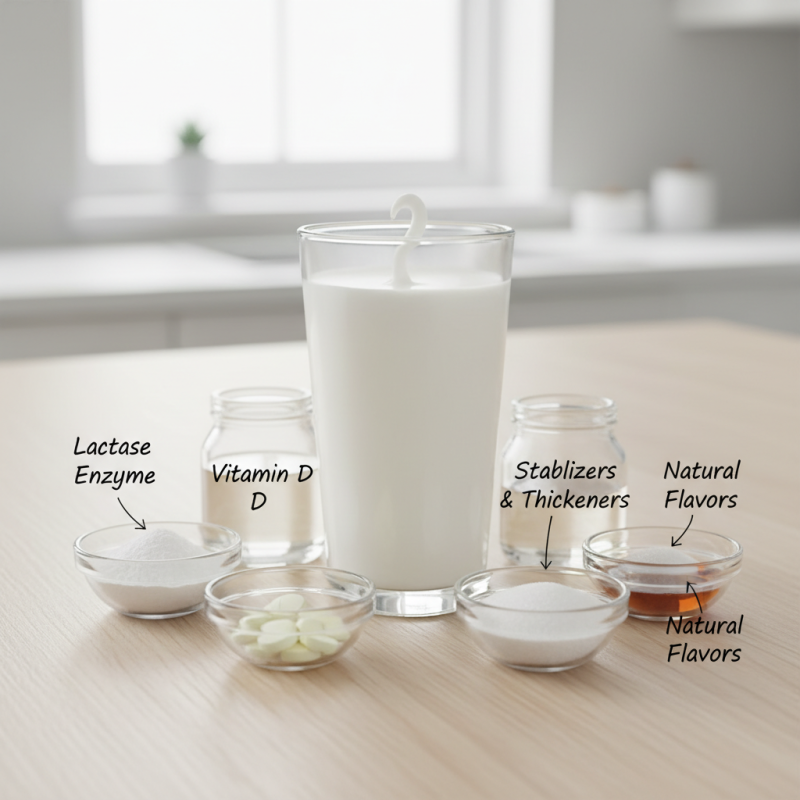
The production of lactose free milk involves careful ingredient selection. Ingredients like lactase enzyme break down lactose into simpler sugars. Other components, such as vitamins and minerals, help maintain nutritional value. This milk resembles regular milk but is specially treated to adapt to dietary needs.
Despite its benefits, some may question certain added ingredients. For instance, stabilizers and thickeners can raise concerns about processed foods. It is crucial to read labels and understand what goes into lactose free milk. This awareness allows consumers to enjoy the product while being mindful of their health choices.
Understanding Lactose-Free Milk: A Comprehensive Overview
Lactose-free milk is an excellent option for those who are lactose intolerant. Understanding its composition helps us appreciate its nutritional value. Cow's milk undergoes a process that removes lactose, making it easier for many to digest. Enzymes like lactase break down lactose, preventing discomfort.
For those new to lactose-free milk, here are some helpful tips. Check the label for added nutrients. Many brands fortify their milk with vitamins such as A and D. Knowing this can enhance your health benefits.
It's worth noting that taste can vary between brands. Some people find lactose-free milk tastes sweeter. That sweetness comes from the broken-down sugars. If you're adjusting your diet, consider trying different types. You may discover a brand that suits your taste buds perfectly.
Top 10 Ingredients in Lactose-Free Milk
This bar chart illustrates the top 10 ingredients commonly found in lactose-free milk, showcasing their respective proportions. Understanding these components helps consumers make informed choices about lactose-free options.
Key Ingredients That Make Milk Lactose-Free
Lactose-free milk is a delicious alternative for those with lactose intolerance. It contains key ingredients that allow everyone to enjoy milk without digestive discomfort. The primary ingredient is regular cow's milk, which undergoes a process to remove lactose.
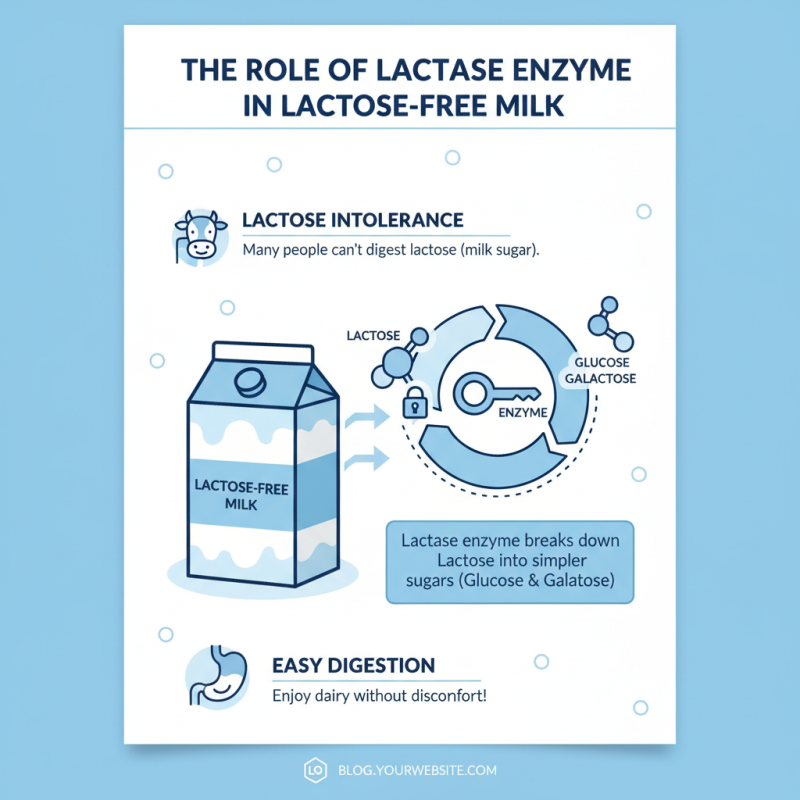
To achieve this, an enzyme called lactase is added to the milk. Lactase breaks down lactose into simpler sugars, glucose, and galactose. This makes it easier to digest, providing a similar taste and texture to traditional milk. Many consumers appreciate how this process retains essential nutrients like calcium and vitamin D.
Stabilizers and emulsifiers may also be included. They help keep the milk homogeneous. This prevents the separation of fat and water components. Some brands may use vitamin D2 or D3 to enhance nutritional value. It’s important to read labels to ensure these additions align with dietary needs.
Though it sounds straightforward, consumers may find that taste can vary between brands. Experiment with different types to discover what works best for you. This exploration into lactose-free options reveals the diversity in products available today.
The Role of Lactase Enzyme in Lactose-Free Milk
Lactose-free milk has become increasingly popular due to the growing number of lactose intolerant individuals. The key to this type of milk is the lactase enzyme. Lactase breaks down lactose, a sugar found in milk, into glucose and galactose. This process makes the milk easier to digest and allows those who are lactose intolerant to enjoy dairy without discomfort.
A study conducted by the National Institutes of Health indicates that approximately 68% of the world’s population has reduced lactase production after weaning. This is significant, as it highlights the need for alternatives in dairy consumption. When lactase is added to regular milk, it transforms lactose into simpler sugars. This change makes the milk taste slightly sweeter and can enhance its appeal to consumers.
Some people may still experience issues after consuming lactose-free products. Sensitivities can vary widely. Research shows that some individuals may react to the proteins present in milk, regardless of lactose content. This aspect is crucial as it reflects the complexity of dietary intolerances. Understanding these variations is essential for creating suitable options to cater to diverse dietary needs.
Nutritional Comparison: Lactose-Free vs. Regular Milk
Lactose-free milk has become popular among individuals who are lactose intolerant. Nutritionally, it closely resembles regular milk. The most significant difference lies in the lactose content. A study published in the "Journal of Dairy Science" showed that lactose-free milk contains the same protein and calcium levels as regular milk, making it a competent substitute.
However, some nutritional experts caution about the potential loss of vitamins during processing. While lactose-free milk is fortified, it may lack some naturally occurring nutrients found in unprocessed dairy. This highlights the need for consumers to be aware of what they choose to drink.
Tip: Always check labels for added vitamins and minerals.
Additionally, some lactase enzyme supplements could aid digestion for those who still wish to consume regular milk. Not everyone needs to completely switch to lactose-free options. Monitoring personal reactions to both types of milk is essential.
Tip: Keep a food diary to track your body’s response to different dairy products.
Potential Allergens and Additives in Lactose-Free Milk
Lactose-free milk is a popular choice for many. However, it is essential to be aware of potential allergens and additives in these products. While they are designed to be gentler on the stomach, they can still contain ingredients that some people may react to.
One common additive is lactase, an enzyme added to break down lactose. Although generally safe, those allergic to enzymes might have concerns. Other ingredients, such as stabilizers and emulsifiers, enhance consistency and shelf life. These substances can cause reactions in sensitive individuals.
Additionally, some lactose-free milks may contain preservatives. While they prolong freshness, they may trigger allergies in some. Knowing what’s in your milk is crucial. Always read labels carefully. It's vital to stay informed about what you consume, especially if you have dietary restrictions.
Top 10 Ingredients in Lactose Free Milk Explained - Potential Allergens and Additives in Lactose-Free Milk
| Ingredient |
Description |
Potential Allergens |
Common Additives |
| Lactase |
An enzyme that breaks down lactose into glucose and galactose. |
None |
None |
| Skim Milk |
Milk from which the fat has been removed. |
Milk proteins |
None |
| Stabilizers |
Substances that help maintain the mixture's texture. |
Some may cause allergies |
Carrageenan, guar gum |
| Vitamins |
Added nutrients to enhance the nutritional profile. |
None |
Vitamin D, Vitamin A |
| Sweeteners |
Added to enhance sweetness without lactose. |
Depends on sweetener type |
Sucralose, stevia |
| Flavorings |
Used to give milk a specific taste. |
Natural or artificial allergens |
Vanilla, chocolate |
| Acidifiers |
Regulate pH and improve flavor. |
None |
Citric acid |
| Minerals |
Minerals enhance the nutritional content. |
None |
Calcium, potassium |
| Preservatives |
Substances to extend shelf life. |
Some may cause allergic reactions |
Potassium sorbate |