Skip to content

Why Choose Vegan Bread Crumbs for Global Food Production?

Vegan Bread Crumbs are becoming a practical ingredient for global food production. They provide crisp texture, consistent coating, and dependable performance across many prepared foods. Manufacturers use them for plant-based nuggets, vegetable patties, seafood alternatives, stuffed products, and frozen meals. Their neutral flavor also allows herbs, spices, and regional seasonings to remain noticeable.

Consistency matters at industrial scale. A reliable crumb size supports even adhesion and predictable frying or baking results. In a busy production line, this can reduce broken coatings, uneven browning, and unnecessary rework. However, “vegan” does not automatically mean allergen-free, gluten-free, or suitable for every market. Responsible buyers should review ingredient declarations, allergen controls, supplier certifications, and batch traceability before approval.

Practical testing is essential.

A food technologist may compare samples after frying, baking, freezing, and reheating. Texture can change after storage, especially when moisture migrates through the coating. Suppliers should provide clear specifications for particle size, moisture, shelf life, packaging, and microbiological quality. Production teams also need documented sanitation procedures and appropriate hazard-control systems, such as HACCP-based plans.

Global sourcing adds another layer of responsibility. Different countries may require specific labeling, permitted additives, or claims documentation. Experienced manufacturers verify these details with qualified regulatory professionals. They also assess transport conditions, warehouse humidity, and supply continuity.

The choice is not purely ethical or commercial. It must work technically.

Vegan Bread Crumbs can support flexible product development and broader consumer access. Still, every claim deserves evidence, and every formula deserves testing. That careful balance makes the ingredient more dependable for modern food production.
Why Choose Vegan Bread Crumbs for Global Food Production?

What Are Vegan Bread Crumbs and How Are They Made?

Why Choose Vegan Bread Crumbs for Global Food Production?

Vegan bread crumbs are dried, ground bread made without meat, dairy, eggs, or other animal-derived ingredients. They provide a crisp coating for vegetables, plant-based patties, pasta bakes, and frozen foods. Their value begins with a clear ingredient list. This matters.

Manufacturers usually mix flour, water, yeast, salt, and vegetable oil to form dough. The dough is proofed, baked, cooled, and cut into smaller pieces. These pieces are dried carefully until their moisture reaches a stable level. Milling then creates fine, medium, or coarse crumbs. Particle size affects crunch, oil absorption, and coating coverage. A food technologist should test each batch, because small changes can alter texture.

Seasonings may include herbs, garlic, onion, or approved natural flavorings. However, vegan does not always mean gluten-free or allergen-free. Facilities need documented supplier checks, sanitation procedures, and cross-contact controls. Regional labeling rules also require careful review. The process sounds simple, but it is not flawless. Excessive drying can create hard crumbs, while insufficient drying may reduce shelf stability. I have found that practical trials reveal problems that laboratory assumptions miss. A crumb can look uniform yet soften quickly during cooking. That detail deserves attention. Global production therefore depends on moisture testing, packaging protection, and consistent quality records.

Why Choose Vegan Bread Crumbs for Global Food Production? - What Are Vegan Bread Crumbs and How Are They Made?

Key composition, production, quality, nutrition, and supply-chain considerations

Data Dimension Typical Data or Range Why It Matters for Global Food Production
Definition Dried and ground bread made without meat, dairy ingredients, eggs, or other animal-derived components. Provides a plant-based coating, binder, topping, or texturizing ingredient for a wide range of food products.
Core Ingredients Wheat flour, water, yeast or another leavening agent, and salt. Vegetable oil, sugar, herbs, or spices may be added depending on the formulation. Simple ingredient systems support standardized manufacturing and allow regional recipe adaptation.
Common Allergen Considerations Wheat and gluten are common in conventional bread crumbs. Some facilities may also handle soy, sesame, or other allergens. Allergen declarations and segregation procedures are essential when selling across different markets.
Bread Production Ingredients are mixed, fermented or chemically leavened, shaped, and baked. Baking temperatures commonly fall within approximately 180–230°C, depending on the product. Controlled baking develops the structure, flavor, and color required for consistent crumb performance.
Drying or Toasting Bread is dried or toasted after baking, often at approximately 120–180°C, until the desired crispness and moisture level are reached. Lower moisture improves crispness and helps reduce the risk of microbial spoilage during storage.
Grinding and Screening Dried bread is milled and screened into fine, medium, or coarse particles. Particle size is commonly specified in millimeters or by sieve classification. Particle size affects coating adhesion, crunch, appearance, oil uptake, and processing behavior.
Typical Moisture Target Many dry bread crumb products are manufactured at approximately 3–10% moisture; the specification varies by formulation and process. Moisture control supports shelf stability, free-flowing behavior, and predictable texture.
Typical Water Activity Dry products are often designed for low water activity, commonly below 0.60, although the actual specification depends on the product and packaging. Low water activity helps limit the growth of most bacteria, yeasts, and molds.
Typical Energy Value Approximately 350–400 kcal per 100 g for plain dry bread crumbs. Useful for recipe formulation, nutrition labeling, and portion-cost calculations.
Typical Macronutrients Per 100 g: approximately 65–75 g carbohydrate, 10–14 g protein, 3–8 g fat, and 3–8 g dietary fiber. The figures support product-development decisions while leaving room for regional recipes and fortification programs.
Primary Food Applications Coatings for vegetables, plant-based proteins, seafood, and meat products; binders for patties and fillings; toppings for baked dishes. One ingredient can serve multiple categories, simplifying inventory and procurement.
Vegan Verification Review ingredient statements, processing aids, supplier declarations, and cross-contact controls to confirm the absence of animal-derived ingredients. Verification improves labeling accuracy and supports access to vegan, vegetarian, and flexitarian markets.
Packaging Requirements Moisture-resistant, food-contact-compliant packaging is commonly used for dry bread crumbs. Barrier packaging helps preserve crispness and protects the product during long-distance transport.
Storage Conditions Store sealed in a cool, dry place away from heat, humidity, strong odors, and direct sunlight. Stable storage conditions help maintain quality across different climates and distribution networks.
Key Quality-Control Tests Moisture, water activity, particle-size distribution, color, flavor, microbiological safety, foreign material, and allergen control. Routine testing supports batch consistency, food safety, regulatory compliance, and reliable performance in finished foods.

Note: Nutritional values, processing temperatures, moisture targets, and shelf-life specifications are typical industry ranges. Actual values vary according to formulation, equipment, particle size, packaging, and local food regulations.

Which Ingredients and Production Methods Define Vegan Bread Crumbs?

Vegan bread crumbs begin with a simple dough, but ingredient choices shape their performance. Wheat flour usually provides structure, while water activates gluten and yeast creates a light crumb. Salt improves flavor and strengthens the dough. Some producers add plant oils for tenderness and a slightly richer mouthfeel. Sugar may support browning, but it is not essential. Eggs, milk, butter, whey, and honey must be excluded from the formulation.

Production often starts with mixing, kneading, proofing, and baking the bread. The baked loaves are then cooled before drying, because trapped moisture can encourage spoilage. After drying, industrial cutters or mills reduce the bread into controlled particle sizes. Sieving creates fine, medium, or coarse crumbs for different food applications. Heat treatment must be carefully monitored. Excessive heat can darken the crumbs and produce a bitter note. Insufficient drying may reduce shelf stability.

Reliable production also requires ingredient traceability and allergen controls. Wheat-based crumbs are not suitable for people avoiding gluten, even when they contain no animal ingredients. Shared equipment can also create labeling concerns. In practical trials, crumbs with more oil may brown quickly but absorb less sauce. Drier crumbs stay crisp longer, though they can feel hard. No formula is perfect. Humidity, flour quality, and milling pressure can change the final texture. Manufacturers should test moisture, particle size, color, and microbial safety throughout production.

Why Choose Vegan Bread Crumbs for Global Food Production?

Which Ingredients and Production Methods Define Vegan Bread Crumbs?

This chart shows a representative vegan lean-bread formula before baking, calculated from standard baker’s percentages: flour 100%, water 60%, vegetable oil 3%, yeast 2%, and salt 2%. The values are normalized to the total ingredient mass.

Vegan bread crumbs are defined by plant-based ingredients and the absence of eggs, milk, butter, and other animal-derived additives. Production generally involves mixing, fermentation, baking, drying or toasting, and milling to the required particle size. Drying reduces moisture and improves shelf stability, while milling creates fine, medium, or coarse crumbs for coatings, fillings, and prepared foods.

What Nutritional Benefits Do Vegan Bread Crumbs Offer?

Vegan bread crumbs can offer more than a crisp coating. Their nutritional value depends on the ingredients and processing method. Whole-grain crumbs may provide dietary fiber, magnesium, and B vitamins. Fiber supports digestive health and can help meals feel more satisfying. Some formulations include peas, lentils, seeds, or soy, which can raise plant protein content. However, standard crumbs may contain little protein. They are not automatically nutritious because they are vegan.

In kitchen testing, whole-grain crumbs create a darker, nuttier crust on vegetables and plant-based cutlets. The texture feels substantial after baking. A useful formulation should balance crispness with moderate sodium and oil absorption. Sodium levels can differ greatly between products. People with gluten allergies should also check the grain source. Fortified versions may offer added nutrients, but vitamin B12 is not naturally reliable in ordinary bread crumbs.

Tips: Read the nutrition panel before large-scale purchasing. Compare fiber, protein, sodium, and serving size. Choose shorter ingredient lists when practical. Test the coating after baking, not only before cooking. A crumb that looks dry may absorb considerable oil. This is easy to overlook. For global food production, consistent particle size also supports even cooking and portion control. Still, nutrition claims need careful verification through supplier documents and laboratory testing. Even a promising recipe may need adjustment for local diets, storage conditions, and consumer expectations.

How Do Vegan Bread Crumbs Support Sustainable Food Production?

Vegan bread crumbs can support sustainable food production when they turn safe surplus bread into a usable ingredient.

13.2% The FAO estimated that 13.2% of global food was lost after harvest and before retail in 2021.
8% The World Resources Institute estimates that food loss and waste create about 8% of global greenhouse-gas emissions.

In practical bakery operations, drying and milling can extend bread’s utility beyond its first sale. A crisp coating, meat-free binder, or topping can replace newly manufactured ingredients. The climate benefit is conditional, not automatic.

The UNEP Food Waste Index Report 2024 estimated 1.05 billion tonnes of food waste in 2022. Bread is especially vulnerable to staling and rejected batches. Recovering suitable loaves may reduce disposal, transport, and embedded energy.

Production teams still need documented controls. They should verify vegan inputs, separate allergen streams, control moisture, and test particle size. Small details matter.

A moist crumb can spoil quickly.
An overly dry crumb may create dust and poor adhesion.

Sourcing also shapes the result. Regional wheat, efficient ovens, recyclable packaging, and shorter delivery routes can improve the footprint. Life-cycle assessment should measure energy, water, packaging, and avoided waste together.

Prevention remains valuable. Yet vegan alone proves little. Some assumptions fail. Transparent supplier records and batch testing build trust, while honest reporting shows where improvement remains unfinished.

How Are Vegan Bread Crumbs Used in Global Food Manufacturing?

Why Choose Vegan Bread Crumbs for Global Food Production?

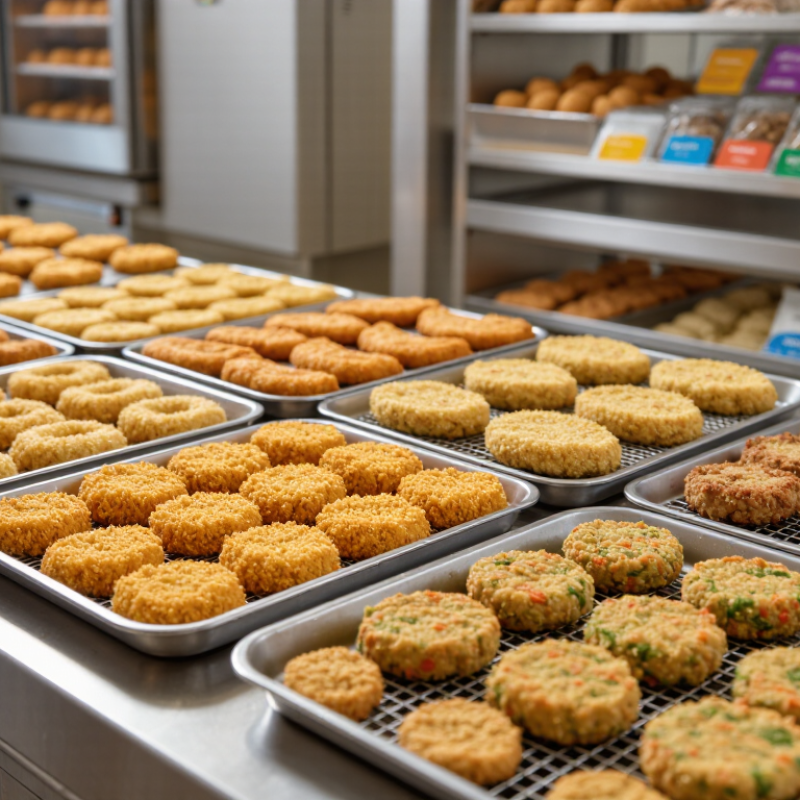
In global food manufacturing, vegan bread crumbs provide texture, structure, and visual appeal. Producers use them for plant-based patties, vegetable nuggets, stuffed foods, and ready-meal toppings. A fine crumb creates a smooth, even crust. Larger particles deliver a more visible crunch.

Manufacturers select crumb size according to the product and processing method. Frozen items may need strong adhesion during storage and cooking. Fried products require controlled oil absorption and stable browning. Baked foods often need lighter coverage. In production trials, moisture level can affect both coating grip and final crispness. Too much moisture may create a soft surface. Too little can cause cracking.

Ingredient teams also check flavor, color, sodium content, and allergen controls. Vegan crumbs can support clean-label formulations, but “vegan” does not remove the need for careful factory controls. Shared equipment may create cross-contact risks. Sanitation records and supplier documentation remain important across international facilities.

Not every batch behaves perfectly. Particle size can vary slightly. That matters more than expected on high-speed lines. Operators may adjust batter viscosity, conveyor speed, or coating pressure. These practical changes help maintain consistent coverage without wasting material. Global manufacturers also consider local tastes. Some markets prefer a pale, delicate crust, while others expect deeper color and a heavier crunch. The process is technical, but the result should still feel familiar on the plate.