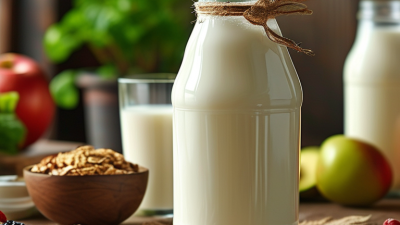
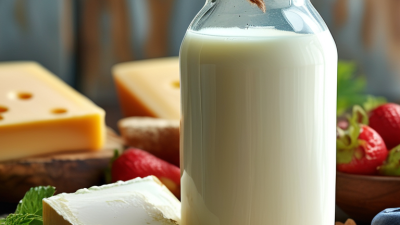
Choosing ultra filtered milk for global markets requires more than comparing protein percentages and price quotes. Buyers must examine how the milk was processed, tested, packed, and transported. The right product should match the destination market, customer expectations, and intended use, from coffee applications to sports nutrition and retail beverages.
Begin with the specification sheet. Check protein, lactose, fat, minerals, calories, shelf life, and serving size. Confirm whether the product is refrigerated or shelf-stable. Ask for recent certificates of analysis, microbiological results, allergen statements, and traceability records. Supplier experience matters. A dependable producer should explain its filtration process clearly and provide consistent batch documentation. Independent laboratory testing can strengthen confidence, especially when importing from a new region.
Supply conditions also deserve close attention. Inspect packaging seals, pallet protection, temperature controls, and delivery records. A strong product can still fail after poor handling. Confirm that labels, claims, additives, and nutrition declarations meet the destination country’s requirements. These rules differ widely. Do not rely on a copied template. No checklist is perfect. Buyers should review risks with qualified food regulatory professionals and reassess suppliers after market changes. A practical evaluation combines technical evidence, factory communication, sample testing, and real delivery performance. That approach helps global buyers choose ultra filtered milk with greater confidence, while leaving room for honest review when results do not match expectations.
Ultra-filtered milk is not simply milk with extra protein. It passes through a membrane that separates components by size. Water and part of the lactose move through, while much of the protein, fat, and calcium remain. The exact result depends on membrane settings, filtration stages, and later formulation.
The International Dairy Federation describes ultrafiltration as a pressure-driven process used to concentrate milk proteins and selected solids. This differs from ordinary pasteurization, which mainly controls microorganisms through heat. Ultra-filtration changes the milk’s composition. A typical product may contain more protein and less lactose than conventional milk, but buyers should check the nutrition panel rather than trust front-label language. “High protein” is not a universal specification.
USDA FoodData Central lists standard fluid milk at roughly 3 grams of protein and 5 grams of carbohydrate per 100 grams, although values vary by fat level. Ultra-filtered products can differ widely from this baseline. The USDA Economic Research Service reported United States fluid-milk consumption near 12.9 gallons per person in 2023, showing why differentiated formats matter in a mature market. That figure does not predict demand everywhere.
For global procurement, request protein, lactose, calcium, fat, pH, shelf-life, and processing-temperature data. Also verify whether minerals were added after filtration. Small formulation changes can affect taste, foaming, shipping stability, and customs classification. It is easy to overstate the benefits. Price, cold-chain capacity, and local dietary habits may matter more than protein concentration.
How to Choose Ultra Filtered Milk for Global Buyers?
Which Nutritional and Processing Features Matter
Ultra filtered milk should be assessed by nutrition, not only by price or protein claims. A practical buyer should check protein per 100 milliliters, total sugar, lactose, fat, calcium, and vitamin content. Higher protein is not automatically better. The formula must also suit local eating habits, product categories, and labeling rules. Review the certificate of analysis for every batch. It should confirm composition, microbiological safety, and shelf-life performance.
Membrane filtration can concentrate milk proteins while reducing water and part of the lactose. However, processing conditions affect taste and texture. Ask about membrane technology, heat treatment, homogenization, and filling controls. Excessive heat may create a cooked flavor or reduce consumer acceptance. A smooth pour matters. So does a clean finish. Storage temperature, packaging barrier properties, and transport time should match the target market’s supply chain.
Global buyers should request traceable production records and consistent testing methods. Compare results from several batches, not one attractive sample. Independent laboratory verification is useful when specifications differ between suppliers. I would also question vague phrases such as “high nutrition” without measured values. That sounds obvious, but it still happens. Calcium fortification, vitamin stability, allergen controls, and date coding deserve careful review. A product that performs well in a refrigerated warehouse may fail during a long inland delivery. Real conditions matter more than a perfect brochure.
For global buyers, ultra-filtered milk should be assessed by validated shelf life, not by filtration claims alone. Ultrafiltration concentrates proteins, but it does not make milk sterile. Shelf life depends on heat treatment, packaging, hygiene, and storage history.
A supplier claiming 60 days should provide challenge-test results, microbial specifications, and batch stability records. I would also request data from the final package, not only laboratory samples.
Cold-chain control begins at filling. The 2023 U.S. Pasteurized Milk Ordinance requires Grade A milk to remain at 7°C or below during storage and distribution.
Buyers should require continuous temperature loggers, calibrated sensors, and clear receiving limits. A single warm loading dock can damage an otherwise compliant shipment. FAO reported that 14% of food is lost between harvest and retail, highlighting the cost of weak logistics controls. Dairy is especially unforgiving.
Trucks need pre-cooling, insulated loading areas, and rapid customs release. Do not assume refrigerated containers guarantee product safety. Ask for alarm records, route plans, backup power, and procedures for rejected pallets.
A spreadsheet may promise 45 days. Real conditions may not.
Global buyers should compare ultra-filtered milk suppliers beyond price and protein percentages. A reliable supplier should explain its filtration process, milk origin, production capacity, and batch controls. Ask for recent production records, not only polished presentations. Visit the facility when possible. A clean receiving area, calibrated testing equipment, and cold storage reveal operational discipline.
Certifications deserve careful checking. Verify the certificate number, issuing body, scope, and expiration date through the official registry. Food safety systems may include HACCP, ISO 22000, or equivalent national standards. However, a certificate alone is not proof of consistent quality. Request recent test results for protein, lactose, fat, microbiological safety, antibiotics, and shelf life. Results should identify the batch and testing laboratory. Small details matter.
Compliance requirements can change by destination market. Confirm labeling rules, allergen declarations, language requirements, import permits, and temperature conditions before signing a contract. The supplier should provide a complete document package, including certificates of analysis, health documents, traceability records, and recall procedures. Check whether carton labels match shipping documents exactly. Mistakes happen. One overlooked unit, date format, or storage statement can delay customs clearance. I would also test a pilot shipment before committing to regular volumes, because laboratory results may not predict handling performance during long transport.
| Evaluation Dimension | Supplier Profile A Ambient UHT UF Milk |
Supplier Profile B Chilled Pasteurized UF Milk |
Supplier Profile C Foodservice UF Milk |
Supplier Profile D Private-Label Export UF Milk |
What Global Buyers Should Verify |
|---|---|---|---|---|---|
| Product Format | Liquid milk; aseptic carton or bag-in-box | Liquid milk; refrigerated carton or bottle | Liquid milk; bag-in-box or bulk foodservice pack | Liquid milk; format customized to destination market | Packaging suitability, filling process, pallet configuration, and destination-country labeling rules |
| Filtration Technology | Ultrafiltration followed by heat treatment; membrane concentration used to reduce water and standardize solids | Ultrafiltration followed by pasteurization; refrigerated distribution required | Ultrafiltration with standardized milk solids; heat treatment selected for foodservice shelf life | Ultrafiltration with product parameters adjusted to buyer specification | Process flow diagram, membrane type, concentration factor, heat-treatment record, and validation studies |
| Typical Protein Content | Approximately 4.5–6.0 g per 100 mL | Approximately 4.5–6.0 g per 100 mL | Approximately 4.0–6.0 g per 100 mL | Typically specified by contract; approximately 3.2–6.0 g per 100 mL | Certificate of analysis for protein, total solids, fat, and density; agree a testing method such as ISO or AOAC where applicable |
| Typical Lactose Position | Reduced lactose may be available; standard UF milk is not automatically lactose-free | Usually contains naturally occurring lactose unless an additional lactase process is used | May be standard or reduced-lactose depending on the specification | Buyer-defined; lactose-free claims require validated analysis and legal review | Do not accept “ultra-filtered” as proof of lactose-free status; request quantified lactose results and claim substantiation |
| Fat Options | Skim, low-fat, reduced-fat, or whole-milk formulations | Skim, low-fat, or whole-milk formulations | Commonly low-fat or whole-milk formulations for beverage and culinary use | Fat level can generally be specified by contract | Check fat tolerance, homogenization conditions, separation stability, and declared nutrition values |
| Unopened Shelf Life | Typically 6–12 months at ambient temperature when commercially sterile and properly packed | Typically 10–30 days under continuous refrigeration, depending on process and packaging | Typically 30–90 days for extended-shelf-life refrigerated formats; shorter for conventional pasteurization | Typically 3–12 months for approved aseptic formats; market-specific validation required | Confirm real-time or accelerated shelf-life data, storage conditions, end-of-life quality, and transport temperature limits |
| Storage Requirement | Ambient before opening; protect from excessive heat and freezing | Refrigerated, normally at or below 4°C unless the approved specification states otherwise | Refrigerated unless supplied in an aseptic format | Depends on the validated process and package; must be printed on the label | Review temperature mapping, data logger requirements, warehouse controls, and post-opening instructions |
| Cold-Chain Exposure | Low before opening | High; refrigerated transport and storage are essential | Medium to high, depending on format | Low for aseptic products; high for chilled products | Compare total landed cost, port delays, reefer availability, temperature excursions, and insurance requirements |
| Common Food-Safety Certification Evidence | HACCP-based system plus FSSC 22000, BRCGS, or ISO 22000 certification may be available | HACCP-based system plus a recognized GFSI-benchmarked certification may be available | HACCP-based system; third-party certification depends on facility size and customer segment | Certification should cover the actual manufacturing site, not only the trading entity | Verify certificate number, scope, site address, validity dates, certification body, and audit status |
| HACCP and Preventive Controls | Should include critical controls for raw milk acceptance, pasteurization or sterilization, aseptic filling, and environmental hygiene | Should include raw milk controls, pasteurization, refrigeration, sanitation, and pathogen prevention | Should include thermal process, filling, cleaning, allergen, and cold-chain controls | Must be documented for the contracted production line and product formulation | Request hazard analysis, CCP or preventive-control monitoring records, corrective actions, and verification results |
| Dairy Regulatory Compliance | May be assessed against applicable national dairy rules, Codex standards, and destination-market requirements | Must meet applicable pasteurized milk standards and refrigerated dairy requirements | Must meet the importing market’s requirements for milk identity, composition, hygiene, and labeling | Requires a market-by-market regulatory review before production approval | Confirm compliance with the importing country’s dairy, food-safety, import approval, and labeling legislation |
| Microbiological Controls | Commercial sterility or aseptic-process evidence; routine testing for relevant indicator organisms | Routine testing for pathogens and hygiene indicators, with strict refrigerated shelf-life controls | Testing frequency based on product risk, process, and customer specification | Testing plan should be agreed in the quality agreement and linked to batch release | Request recent results for pathogens, total plate count, coliforms or Enterobacteriaceae, and environmental monitoring where relevant |
| Residue and Contaminant Controls | Raw milk screening should address veterinary drug residues, aflatoxin M1, heavy metals, and other legally controlled contaminants | Same core controls, with additional attention to short shelf life and chilled handling | Testing frequency may be risk-based but should cover legal maximum limits | Destination-market maximum residue limits must be included in the agreed specification | Review supplier approval for farms, sampling plans, laboratory accreditation, and non-conformance procedures |
| Allergen Declaration | Milk is a major food allergen in many jurisdictions | Milk must be clearly declared; cross-contact controls are required where other allergens are handled | Check shared-line controls for soy, nuts, cereals, or other regulated allergens | Allergen statements must match the destination-market legislation and actual facility profile | Request allergen matrix, cleaning validation, label proof, and cross-contact risk assessment |
| Packaging Compliance | Aseptic packaging should be suitable for dairy products and migration-compliant for the destination market | Refrigerated packaging should provide seal integrity, oxygen protection, and transport durability | Bulk packaging should meet food-contact, pallet, handling, and dispensing requirements | Artwork and packaging materials should be approved before commercial production | Request food-contact declarations, migration test reports, packaging specifications, and seal or integrity testing |
| Traceability | Raw milk, processing batch, packaging lot, and shipment should be traceable | Farm or collection source, production batch, cold storage, and delivery should be traceable | Lot coding should support rapid withdrawal from foodservice channels | Traceability should cover contract manufacturing, relabeling, and export documents | Request a one-step-back and one-step-forward traceability test, preferably completed within 24 hours |
| Minimum Order Quantity | Often 1–5 full container loads for standard export packaging | Often smaller regional orders, but refrigerated freight may require larger economic volumes | Frequently available in mixed pallets or foodservice quantities, subject to production planning | Usually depends on packaging artwork, formula customization, and annual volume commitment | Confirm MOQ by SKU, pallet, container, packaging material, and first production run |
| Typical Production Lead Time | Approximately 3–8 weeks after specification and packaging approval | Approximately 2–6 weeks, subject to production schedule and cold-chain booking | Approximately 2–6 weeks for standard formats | Approximately 6–12 weeks when new artwork, packaging, or validation is required | Separate production lead time from packaging procurement, export documentation, and transit time |
| Required Technical Documents | Product specification, nutrition panel, COA, process flow, shelf-life study, certificate of analysis, and food-safety certificate | Same documents plus refrigerated distribution and temperature-control records | Product specification, allergen statement, packaging specification, COA, and handling instructions | Full technical file plus destination-market label review and change-control procedure | Documents should be current, signed or controlled, internally consistent, and linked to the actual manufacturing site |
| Best Fit for Global Buyers | Long-distance shipping, markets with limited refrigeration, retail ambient distribution | Shorter regional routes, premium chilled distribution, and buyers with reliable cold-chain infrastructure | Hotels, restaurants, catering, institutional kitchens, and high-volume dispensing systems | Importers seeking customized specifications, local-language packaging, or private-label programs | Select based on regulatory access, landed cost, logistics risk, documentation quality, and consistent batch performance |
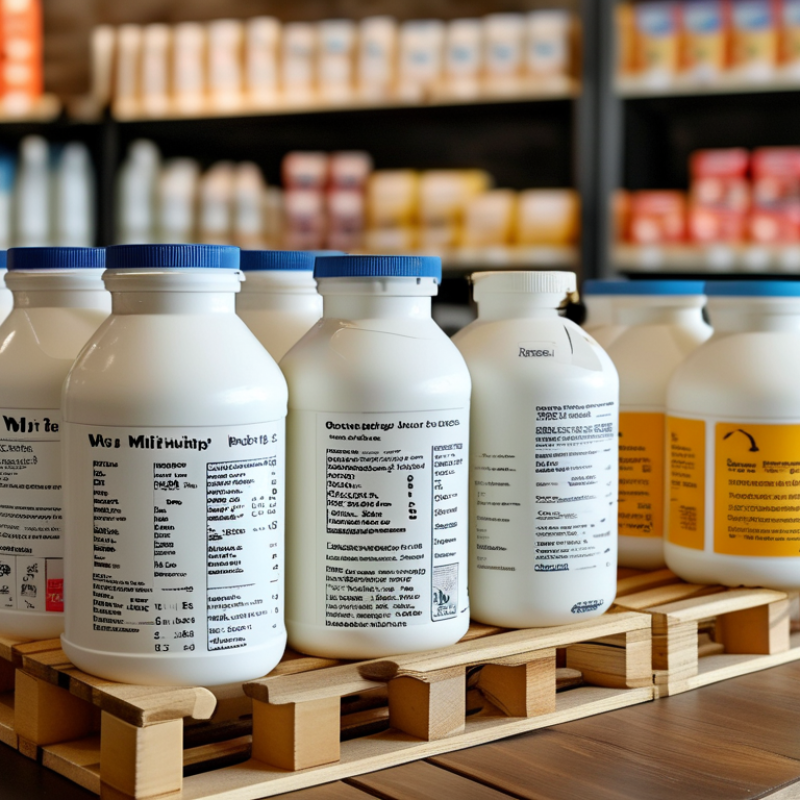
For global buyers, ultra-filtered milk should be evaluated beyond its protein percentage. The OECD-FAO Agricultural Outlook 2024-2033 projects global milk production to grow by about 1.6% annually. This supports demand, but market fit still depends on local diets, labeling rules, and retail refrigeration. A buyer should compare protein, lactose, fat, packaging size, and expected shelf life against actual consumer habits. Premium nutrition claims may fail in price-sensitive markets.
Cost needs a landed-cost model. Include raw milk, membrane filtration, heat treatment, packaging, inland transport, ocean freight, insurance, duties, and cold storage. The International Dairy Federation’s World Dairy Situation 2024 shows continuing pressure from feed, energy, and logistics costs. Request quotations under the same Incoterm. Otherwise, comparisons become misleading. Terms matter. Ask for minimum order quantity, production lead time, temperature limits, payment schedule, and claims procedures. A lower unit price can be a false economy when damaged cartons arrive after long transit.
Purchase documents should specify microbiological limits, nutritional tolerances, batch coding, pallet configuration, and remaining shelf life at delivery. The Codex General Standard for the Labelling of and Claims for Prepackaged Foods provides a useful international reference, but local requirements still control import approval. Verify certificates directly and conduct independent pre-shipment testing. I would not trust a spreadsheet alone. One overlooked customs classification or weak cold-chain handover can erase the expected margin. Even experienced buyers sometimes underestimate demand volatility. Use a pilot shipment before committing to annual volume.
This buyer scorecard uses a 100-point decision model: landed cost, market fit, logistics performance, nutrition compliance, and purchase terms. A higher score indicates stronger suitability for cross-border sourcing.
Planning benchmark: ultra-filtered milk typically provides approximately 5–6 g of protein per 100 ml and 60–90 days of refrigerated shelf life, depending on the formulation, packaging, and processing system. Actual specifications and trade terms should be confirmed with the supplier.